How to Choose the Right Power Electric Generator?
Choosing a Power Electric Generator starts with a practical question: which equipment must keep running when utility power fails? The answer may be a refrigerator, a well pump, medical equipment, or an entire building. Each has a different load profile. Some motors also draw extra power at startup, so matching a generator’s running watts alone can leave a critical appliance struggling to start.
Outages make this choice more than a technical exercise. The U.S. Energy Information Administration reported that customers experienced an average of about 5.5 hours of power interruptions in 2022, excluding major events. That figure highlights a planning challenge, not a guarantee for any household or site. Local conditions can differ sharply. A storm can turn a brief outage into a long one.
A sound selection process compares required load, starting surge, runtime, fuel availability, noise, and installation needs. List essential devices and check their nameplate ratings; a pump’s small label may reveal a surprisingly high startup demand. Then compare those needs with the generator’s rated output, not just its advertised peak. It is easy to overlook fuel storage or maintenance. That deserves a second look. Portable and standby models also differ in how they connect and operate, so qualified installation guidance matters. This guide explains how to evaluate those trade-offs and choose a unit suited to real operating conditions, rather than an optimistic estimate.
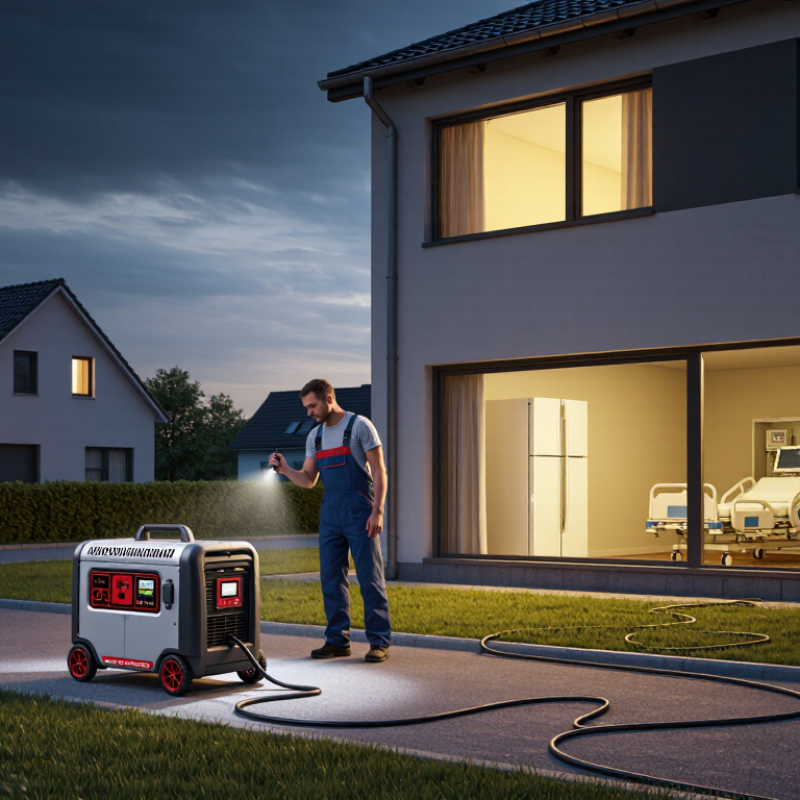
Determine Your Required Power Capacity
Determine the loads your generator must support at the same time. Add the running watts listed on each appliance’s nameplate, such as a refrigerator, lights, and a sump pump. Then account for starting demand: motors in pumps and air conditioners can briefly draw more power than they use while running. Check each manual or ask a qualified electrician when the surge rating is unclear. Averages hide peaks.
The U.S. Energy Information Administration reported average residential electricity use of 10,791 kilowatt-hours per customer in 2022. That equals roughly 1.23 kilowatts averaged across the year, but it is not a generator-sizing figure. A home may need several times that amount when heating, cooling, and kitchen equipment run together. The data comes from the EIA’s Electric Power Monthly, and it describes annual consumption—not momentary demand.
Make a short list of essential circuits and note each load’s running and starting watts. Add only equipment you expect to operate together, then compare that total with the generator’s continuous output, not just its advertised peak. Leave room for an unexpected load. The estimate will still be imperfect; real use rarely follows a neat worksheet. Have an electrician verify transfer equipment and circuit requirements before installation.
Compare Generator Types and Fuel Sources
Choosing a generator starts with how it will be used. Inverter models suit sensitive electronics and changing loads; conventional portable units often serve tools and basic backup. Standby generators can power selected household circuits automatically when paired with suitable transfer equipment. Check both running watts and startup demand: a refrigerator may draw more power when its compressor starts. Small details matter. A unit that looks adequate on paper may struggle when several motors start together.
Fuel choice affects runtime, storage, and convenience. Gasoline is widely available, but stored fuel can degrade, so rotation and safe storage need planning. Propane stores well and burns cleanly, though cylinder size limits runtime. Diesel is common for heavy-duty applications, while natural-gas models can use a fixed supply where service remains available. The U.S. Energy Information Administration reports that natural gas supplied about 43% of U.S. utility-scale electricity in 2023. That figure describes grid generation, not outage reliability; a gas supply can still be interrupted. Compare the generator’s fuel consumption at your expected load, not just its advertised maximum. I would not treat any single fuel as an obvious winner. Availability, noise, maintenance, and realistic run time can shift the decision.
How to Choose the Right Power Electric Generator? — Compare Generator Types and Fuel Sources
Approximate energy content by fuel source, shown as lower heating value (LHV). Higher energy content per kilogram does not necessarily mean longer runtime; generator efficiency, fuel storage, and load also matter.
Typical pairings include gasoline for portable generators, diesel for standby or heavy-duty generators, propane for dual-fuel units, and natural gas for permanently connected standby generators. Fuel values are approximate and vary with composition.
Assess Runtime, Efficiency, and Noise Levels
How to Choose the Right Power Electric Generator?
Runtime, efficiency, and noise matter most when a generator must serve a real task. Estimate the devices you will run at the same time, then check their combined wattage against the generator’s rated output. Starting appliances can briefly need more power than they use while running. Runtime figures also depend on load, fuel capacity, and maintenance, so treat advertised estimates as a guide, not a guarantee. A unit may run longer when lightly loaded.
Efficiency is about more than fuel use per hour. A generator running far below its useful load may waste fuel, while an overloaded one can struggle or shut down. Compare fuel consumption at a similar output, if that information is available. Noise varies with design, distance, and workload. Check the stated sound level and how it was measured; readings taken at different distances are hard to compare. Quiet on paper isn’t always quiet beside a tent or open window. Placement matters, too: operate outdoor generators outside and away from doors and windows, following the manual’s safety instructions.
Tips: Write down your expected load and desired runtime before shopping. If possible, listen from the distance where you plan to use it. Leave some capacity in reserve. I’d still double-check the specifications; real conditions can be less tidy than a chart.
Review Safety, Installation, and Maintenance Needs
How to Choose the Right Power Electric Generator?
Safety and installation deserve attention before comparing output ratings. Choose a unit that can handle the appliances you actually need, then check its placement requirements. A generator that seems suitable in a garage can create a serious exhaust hazard. Keep fuel-burning equipment outdoors, well away from doors and windows, and follow the manufacturer’s clearance instructions. Never run it in an enclosed space. Carbon monoxide cannot be seen or smelled. A working carbon monoxide alarm adds protection, but it does not make unsafe placement acceptable.
Have a qualified electrician assess the connection to your home. A correctly installed transfer switch helps prevent dangerous backfeed into utility lines. Do not improvise wiring. Check that the installation surface is stable and dry, and that cables are rated for the load and outdoor conditions. Details matter here. They are easy to miss. Before buying, confirm that the unit can be serviced where you live and that its maintenance schedule fits your routine. Regularly inspect cords, connections, air filters, and fuel lines for wear or leaks. Change oil as directed, and test the generator periodically under a safe load. A short test can reveal a weak battery or hard starting before an outage. It may still be inconvenient, but discovering that during a storm is worse.
Choose a Model That Fits Your Budget and Use Case
A generator should match the work you actually need it to do, not an impressive number on a sales label. List the appliances or tools you expect to run together, then check their running watts and starting watts. A refrigerator, for example, may need extra power when its compressor starts. Add a little headroom. That estimate can still be wrong if you forget a kettle or work light.
Set a budget for more than the purchase price. Fuel, oil, routine maintenance, and storage needs affect the long-term cost. A lower-priced model may be enough for occasional outages, while frequent use can justify paying more for quieter operation or better fuel efficiency. Compare expected runtime at a realistic load, not just the maximum figure. Small details matter.
Your use case helps narrow the choices. For camping or powering sensitive electronics, a compact inverter generator may offer stable power and easier transport. For several household essentials during an outage, calculate the combined load and consider a larger unit. Check its weight, outlet types, and noise level before buying; those are easy to overlook. Keep any fuel-powered generator outdoors, well away from doors and windows, and follow the operating manual. A spreadsheet helps, though your first estimate may need revising.

 Sinotruk Parts
 Shacman Parts
 FAW Parts
 Dongfeng Parts
 Foton Parts
 CHENGLONG PARTS
 Golden Dragon Bus Parts
 King Long Parts
 Yutong Parts
 Higer Parts
 Zhongtong Parts
 Ankai Parts




 Mr. Perry Wu International Sales Director