How to Choose the Best DG Generator in 2026?
Choosing the best Dg Generator in 2026 requires more than comparing prices or advertised power ratings. A reliable decision begins with the site’s actual electrical demand, operating environment, and future expansion plans. A workshop may need 180 kVA during motor startup, even when its average load stays below 100 kVA. That difference matters.
Modern buyers should examine fuel efficiency, emissions performance, noise levels, and control-system reliability. Digital controllers can display load, voltage, service hours, and fault codes in real time. However, convenient screens do not replace proper maintenance or trained operators. Check the alternator, engine, cooling system, automatic transfer switch, and enclosure rating. Ask for verified test data, not vague claims. Independent certification and transparent technical documentation provide stronger evidence of quality.
The best choice also depends on service support after installation. A generator with excellent specifications can become expensive if filters, belts, or replacement parts are difficult to obtain. Review warranty terms, technician response times, and local inventory. Calculate total ownership costs across fuel, servicing, installation, and downtime. Do not ignore battery storage conditions or winter starting performance. Small details often cause major interruptions.
There is no universal answer.
A careful selection process should challenge its own assumptions. Load measurements may be incomplete, and projected demand may change. Recheck them. By combining field experience, manufacturer evidence, and professional electrical assessment, buyers can select a Dg Generator that performs safely and consistently in real operating conditions. Reliability is not promised by a brochure. It is demonstrated over time.
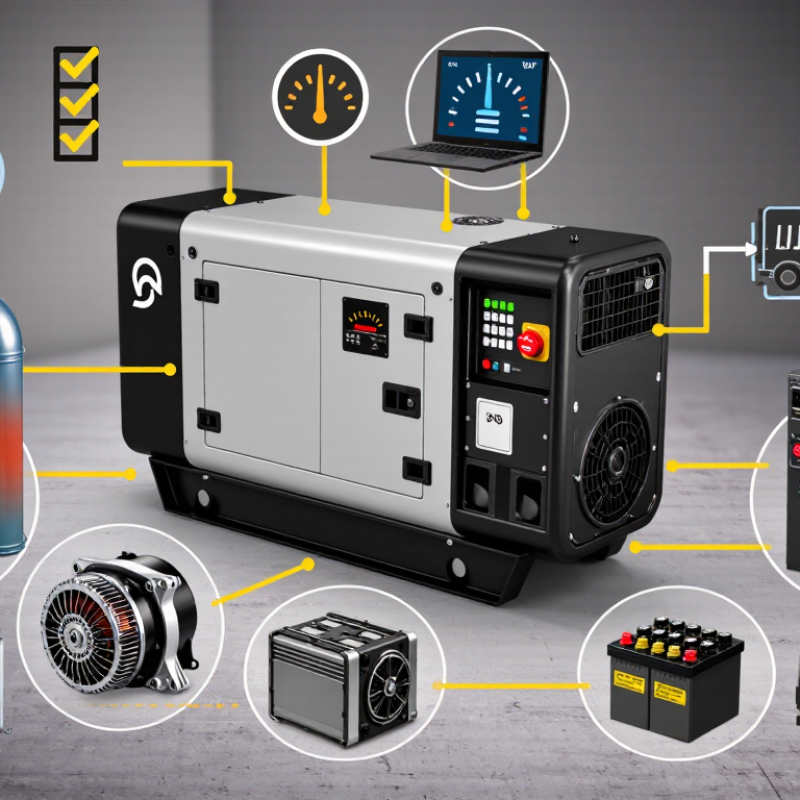
Understanding DG Generator Types and Their 2026 Applications
Choosing a diesel generator in 2026 starts with the duty cycle, not the nameplate size. Standby units protect buildings during short outages. Prime generators support variable loads where grid power is unreliable. Continuous-duty models run steady loads for long periods. The distinction matters. A standby-rated unit may struggle with daily construction work. Field assessments often reveal inaccurate load estimates when pumps, lifts, and compressors start together. Measure starting current, not only average demand. Leave sensible headroom.
In 2026, data centers require high availability, rapid synchronization, and tested fuel autonomy. Hospitals prioritize transfer speed, clean installation, and dependable maintenance access. Construction projects usually need rugged prime power, easy relocation, and dust tolerance. Remote telecom sites may benefit from compact generators paired with batteries and solar. Hybrid systems can reduce fuel consumption, but they add controls and battery replacement planning. More technology is not automatically better.
Selection should match local temperature, altitude, noise limits, fuel quality, and emissions requirements. Request verified test data, service intervals, protection functions, and documented load-bank records. A smaller generator may be efficient, yet frequent overloads shorten its life. An oversized unit can waste fuel and perform poorly at light load. That trade-off is easy to miss. Actual demand changes. Have qualified technicians review the load profile before installation, then verify performance through a documented load-bank test.
How to Choose the Best DG Generator in 2026?
Understanding DG generator types and their typical 2026 applications starts with selecting the correct power range and duty profile.
Portable and residential standby generators generally serve smaller loads, while commercial standby and industrial prime generators support larger facilities and longer operating periods. Large mission-critical and utility systems are selected for hospitals, data centers, infrastructure, and continuous or extended backup power. The rating bands shown are typical engineering planning ranges based on common diesel generator sizing practice and ISO 8528 rating concepts; final selection should consider starting currents, load diversity, altitude, temperature, emissions requirements, and required runtime.
Defining Your Power Requirements and Operating Conditions
Choosing the best DG generator in 2026 starts with an accurate picture of your power requirements. List every load, not only its running wattage. Pumps, compressors, elevators, and refrigeration units may demand two to four times more power during startup. Record motor starting methods, sensitive electronics, and future expansion. A small margin helps, but excessive oversizing can cause poor fuel efficiency and unstable loading.
Operating conditions matter just as much. A generator working at 1,800 metres needs derating for thin air. High temperatures also reduce available output. Dust, salt, moisture, and enclosed rooms affect cooling and service life. During site assessments, I check ventilation paths, exhaust clearance, fuel storage, and access for oil changes. These details often matter more than a catalogue rating.
Tips: Measure peak loads with a power analyser when possible. Separate essential and nonessential circuits. Test the largest motor before final selection. Consider continuous, standby, or prime duty carefully. A neat calculation can still be wrong. Leave room for uncertainty, but question every extra kilowatt. Plan weekly inspections, monthly load tests, and realistic maintenance access. If the unit will run near full load for long periods, confirm derating, fuel consumption, and cooling performance with qualified engineers and verified technical data.
Comparing Fuel Efficiency, Performance, and Environmental Impact
Choosing the best DG generator in 2026 requires more than checking rated output. Fuel efficiency should be measured at the loads you actually use. A unit running at 20% load may waste fuel and develop wet-stacking problems. A load-bank test reveals its liters-per-kilowatt-hour pattern. Record fuel use, power output, ambient temperature, and maintenance status. Small details matter. A stable 70–80% load often gives a clearer comparison than a headline consumption figure. However, every site behaves differently.
Performance includes starting time, voltage stability, overload response, and operation in heat or dust. Ask for test records, not only brochures. Check whether the generator can support motors, pumps, and sensitive control systems without unacceptable voltage dips. Regular oil changes, clean filters, and correct coolant levels protect performance over time. Neglected maintenance can erase the efficiency advantage of a newer unit. That part is easy to overlook.
Environmental impact deserves equal attention. Lower fuel consumption usually means lower carbon dioxide emissions, while suitable exhaust treatment can reduce nitrogen oxides and particulate matter. Noise levels also affect nearby workers and communities. Confirm the generator’s emissions data under realistic loads, because laboratory figures may not match daily operation. A clean spreadsheet can still mislead. Fuel quality, poor ventilation, and frequent low-load running may increase emissions. I would compare measured results across several operating conditions, then question any figure that looks unusually perfect.
Evaluating Reliability, Safety Features, and Smart Controls
How to Choose the Best DG Generator in 2026?
Reliability begins with the load, not the brochure. Record starting currents from pumps, compressors, and air conditioners before comparing generator ratings. A unit that handles daily demand may still fail during motor startup. I have seen this mistake delay operations within seconds.
Choose an engine and alternator tested for continuous duty, with clear service intervals and accessible filters. Check automatic voltage regulation, overload protection, low-oil shutdown, and emergency-stop controls. These features should work during faults, not only during demonstrations. Confirm compliance with recognized safety standards and local electrical codes. A licensed technician should verify grounding, cabling, ventilation, and transfer-switch installation.
Smart controls can improve response time. Look for remote alarms, fuel tracking, temperature readings, runtime logs, and automatic weekly tests. A useful controller should show plain fault messages, not confusing codes. Cybersecurity also matters when remote access is enabled. Use strong authentication, limited user permissions, and secure software updates. Keep a manual control option. Networks fail sometimes. That detail is easy to overlook.
Ask for maintenance records and a realistic load-bank test. A polished enclosure proves little. During inspection, listen for uneven engine speed, inspect oil leaks, and check battery terminals for corrosion. I would also question optimistic fuel-consumption figures. Actual performance changes with altitude, weather, and load. That uncertainty deserves honest planning.

 Sinotruk Parts
 Shacman Parts
 FAW Parts
 Dongfeng Parts
 Foton Parts
 CHENGLONG PARTS
 Golden Dragon Bus Parts
 King Long Parts
 Yutong Parts
 Higer Parts
 Zhongtong Parts
 Ankai Parts




 Mr. Perry Wu International Sales Director