What Is the Best China Industrial Genset for Global Buyers?
Choosing the best China Industrial Genset is not simply a price comparison. Global buyers must evaluate reliability, emissions compliance, fuel efficiency, service access, and total ownership cost.
The market is becoming more demanding. The International Energy Agency’s Electricity 2024 report projects global electricity demand will grow by an average of 3.4% annually through 2026. This growth increases pressure on factories, construction sites, hospitals, mining operations, and data facilities. Backup power must start quickly and operate steadily. It must also perform in hot, dusty, humid, or high-altitude environments.
The stakes are real.
MarketsandMarkets estimates that the global diesel generator market will continue expanding through the decade, supported by infrastructure investment and unreliable grid supply. However, market size alone cannot identify the right supplier. A dependable Industrial Genset should match its engine, alternator, controller, and enclosure to the application. Buyers should also verify ISO 8528 performance data, factory testing, spare-parts availability, and regional technical support. The World Bank’s Logistics Performance Index highlights how supply-chain quality varies significantly between countries, making after-sales planning essential.
A lower quotation may look attractive. It can become expensive when maintenance records are unclear, components are difficult to source, or local technicians lack training. That is an uncomfortable point, but it deserves attention. This guide compares leading Chinese genset options through practical operating requirements, documented specifications, certification evidence, and supplier credibility. The final choice should fit the site, not merely the brochure.
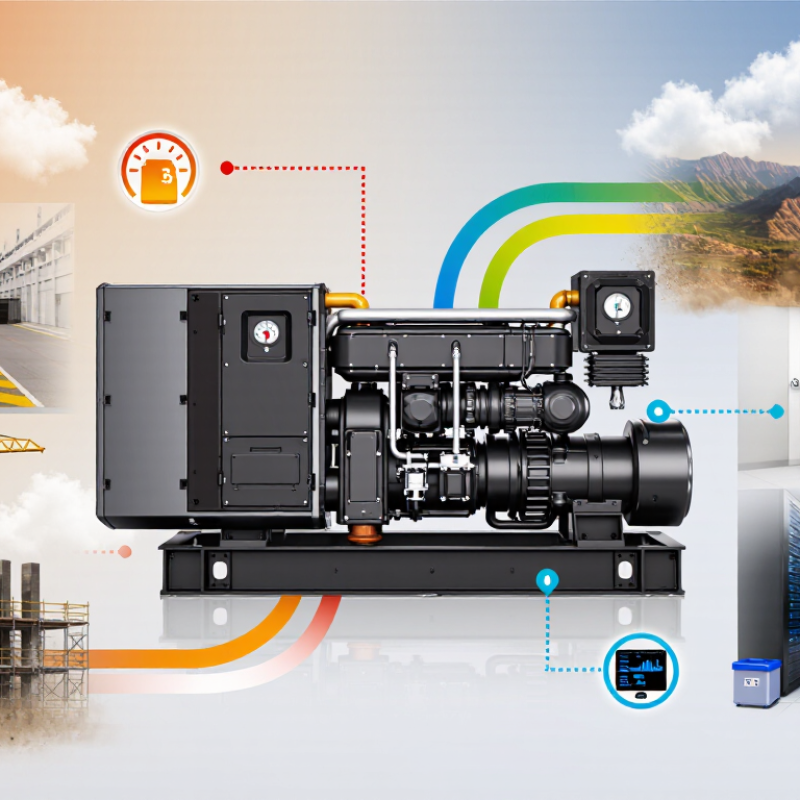
Industrial Gensets: Definition, Applications, and Global Market Role
An industrial genset is an engine-driven generator package built for demanding, continuous, or standby power. It combines an engine, alternator, control panel, cooling system, and protective enclosure. Unlike portable units, it can support factories, hospitals, data centers, mines, and construction sites. The best China industrial genset is not automatically the largest or cheapest. It must match the load profile, fuel access, climate, service capacity, and local grid conditions.
Global buyers often specify prime power for unstable grids and standby power for emergency outages. A 500 kVA genset may run a workshop, yet motor starting can require much more than steady production loads. That matters when compressors, pumps, or elevators start together. In coastal areas, salt air can attack terminals and radiators. At high-altitude sites, thinner air can reduce engine output unless the supplier applies correct derating. Field checks should include factory test records, wiring diagrams, noise data, emissions documents, and spare-parts availability. Ask for measured fuel consumption, not only catalog promises.
China has an important role in the global genset market through broad manufacturing capacity and flexible configurations. Export reliability, however, depends on testing quality, traceable components, and responsive technical support. A serious supplier should explain alternator insulation, controller functions, synchronization options, and maintenance intervals clearly. Buyers should verify regional standards with qualified local professionals. Some quotations look complete but hide transport, commissioning, or long-term service costs. Even careful sizing can miss unusual site conditions. That is where practical judgment matters.
Key Factors for Evaluating Chinese Industrial Genset Manufacturers
What Is the Best China Industrial Genset for Global Buyers?
Global electricity demand is forecast to grow by about 4% annually through 2026, according to the International Energy Agency’s Electricity 2024 report. This pressure makes dependable industrial gensets important for factories, construction sites, hospitals, and remote projects. Yet the lowest quotation rarely indicates the best value. I would not trust a polished brochure alone.
Evaluate each Chinese manufacturer through documented testing and field evidence. Ask for ISO 8528 performance data, including voltage stability, frequency response, and rated-load capability. Request a witnessed factory acceptance test with a resistive-reactive load bank. Fuel consumption should be measured at 25%, 50%, 75%, and 100% load, not only at the headline rating. Small details matter.
Check engine, alternator, controller, and enclosure specifications separately. Confirm emissions compliance for the destination market before payment. The manufacturer should provide wiring diagrams, spare-parts lists, maintenance intervals, and remote-support procedures. ISO 9001 certification helps, but it does not prove every unit is reliable. A site visit can reveal assembly discipline, calibration records, and stored components. Service capacity is often underestimated. Ask how quickly common filters, sensors, and control modules can reach your location. A cheaper unit may become expensive after one failed shipment. That risk deserves a realistic calculation.
Comparing Generator Types, Power Ratings, and Fuel Options
What Is the Best China Industrial Genset for Global Buyers?
Comparing Generator Types, Power Ratings, and Fuel Options
For global buyers, the best China industrial genset depends on site conditions, not a catalog headline. Diesel sets suit heavy loads, remote sites, and long runtimes. Gas gensets can reduce local emissions, but they require stable fuel pressure and dependable pipeline access. Dual-fuel systems offer flexibility, although their controls and maintenance are more demanding. Small details matter.
Select the power rating from measured demand, not the largest available frame. List motors, pumps, compressors, lighting, and control equipment. Starting current may briefly exceed running load several times. A 500 kVA set may struggle when multiple motors start together. Check whether the application needs prime power or standby power. Keep practical headroom, usually 10 to 20 percent, without excessive oversizing. An oversized engine may operate lightly loaded, increasing deposits and wasting fuel.
Fuel selection should reflect temperature, storage rules, delivery distance, and technician skills. Diesel stores easily, but tanks need filtration and water control. Natural gas burns cleanly, yet supply interruptions can stop generation unexpectedly. Biodiesel blends may work, but compatibility depends on engine approval and climate. Request factory test records, load-bank results, acoustic data, emissions documents, and independent inspection. Confirm voltage, frequency, enclosure rating, synchronization, spare parts, and service response times. A neat datasheet can still hide integration problems.
What Is the Best China Industrial Genset for Global Buyers?
Comparing typical electrical efficiency across common industrial generator types and power ratings.
Diesel gensets generally provide the highest efficiency and strong performance under variable loads. Natural-gas units can reduce local emissions where a reliable gas supply is available, while dual-fuel systems offer fuel flexibility. Actual results depend on engine design, ambient conditions, load factor, altitude, and emissions configuration.
Assessing Quality, Compliance, Service, and Total Ownership Costs
Selecting the best China industrial genset requires more than comparing quoted prices. In practical project reviews, I inspect the engine, alternator, controller, frame, and cooling system. Clean wiring, strong welds, and accessible filters often reveal manufacturing discipline. Request verified factory test reports, not attractive photographs. Small details matter.
Compliance must match the destination market and operating environment. Ask for test evidence covering emissions, electrical safety, noise, and generator performance. ISO 8528 references can support comparison, but local certification requirements still demand attention. Documents should identify the exact model and configuration. A load-bank test is especially useful. It shows voltage stability, frequency response, fuel use, and temperature control under pressure. Some paperwork looks complete but lacks traceable test conditions. That gap deserves scrutiny.
Service capability strongly affects total ownership cost. Confirm spare-parts availability, technician response times, remote diagnostics, and warranty procedures before signing. Keep common filters, belts, sensors, and relays on site. Fuel consumption, oil intervals, battery replacement, transport, installation, and downtime all belong in the calculation. A cheaper purchase can become expensive after one avoidable shutdown. I have seen buyers underestimate local fuel quality and climate effects, especially in dusty or humid sites. Those assumptions need testing. A reliable evaluation includes realistic load profiles, five-year maintenance estimates, and a clear record of what remains uncertain.
Selecting the Best China Industrial Genset for Different Projects
Selecting the best China industrial genset starts with the project, not the catalogue.
A construction site may need strong starting power for cranes, pumps, and compressors. A hospital requires stable output, low noise, and dependable automatic transfer. A factory may need continuous operation, fuel efficiency, and easy maintenance access. Define the prime load, standby load, running hours, and future expansion before choosing capacity. Do not size the generator only by today’s average demand. Motor starting currents can cause voltage dips.
Site conditions also matter. High altitude, extreme heat, dust, humidity, and poor fuel quality can reduce performance. Ask for documented derating data and factory test records. Confirm the generator meets local emissions, electrical, and safety requirements. Check control functions, enclosure protection, noise levels, and spare-part availability. A reliable supplier should provide clear manuals, commissioning support, and practical warranty terms.
Tips: Compare total ownership cost, not only the purchase price. Review fuel consumption at 50%, 75%, and 100% load. Request a witnessed load-bank test when the project is critical. Inspect service access around filters, batteries, radiators, and control panels. Keep questions in writing.
A cheaper unit may seem efficient. It may not be.
From project reviews, service response often matters more than a small price difference. Still, every application is different, and early specifications can be incomplete. Recheck the load schedule before ordering. A careful decision now can prevent unstable power, delayed repairs, and costly site changes later.

 Sinotruk Parts
 Shacman Parts
 FAW Parts
 Dongfeng Parts
 Foton Parts
 CHENGLONG PARTS
 Golden Dragon Bus Parts
 King Long Parts
 Yutong Parts
 Higer Parts
 Zhongtong Parts
 Ankai Parts



 Mr. Perry Wu International Sales Director