Why Choose CNG Generators for Your Energy Needs?
Choosing CNG generators for energy needs is a decision rooted in sustainability and efficiency. Natural gas is a cleaner alternative to traditional fuels. According to a report by the U.S. Energy Information Administration (EIA), the use of natural gas in power generation has increased significantly over the past decade, accounting for over 40% of electricity generation in the U.S. in recent years. This shift highlights an industry trend towards greener energy solutions.
Dr. John Mason, a leading expert in the CNG generator industry, emphasizes, “CNG generators not only reduce emissions but also offer significant cost savings.” His insights reflect the financial benefits many organizations are experiencing. Lower fuel costs, combined with reduced maintenance needs, make CNG generators a viable option for diverse energy demands.
Despite these advantages, the transition to CNG is not without challenges. Some companies hesitate due to upfront costs or infrastructure availability. However, as technology advances and awareness grows, the hurdles appear surmountable. With continuous improvement and increasing recognition, CNG generators could play a pivotal role in the future of energy production.
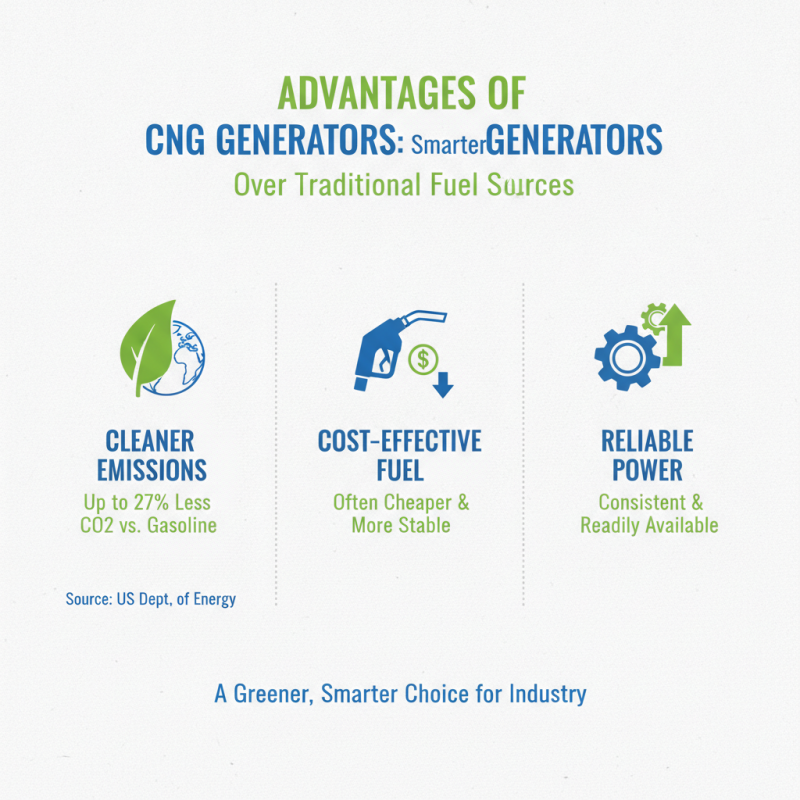
Advantages of CNG Generators Over Traditional Fuel Sources
Compressed Natural Gas (CNG) generators are gaining traction as a reliable energy source. They offer several advantages over traditional fuels like diesel or gasoline. According to the U.S. Department of Energy, CNG produces up to 27% less carbon dioxide per mile compared to gasoline. This reduction in emissions is significant for industries seeking to lower their carbon footprints.
Moreover, CNG is often cheaper than conventional fuels. The American Gas Association reports that the price per gasoline gallon equivalent is frequently lower. This cost-efficiency makes CNG an attractive option for businesses focused on operational savings. However, the initial investment in CNG infrastructure can be a barrier for some companies, necessitating careful financial planning.
CNG also requires less maintenance than traditional generators. This means fewer downtime and lower repair costs overall. However, not all locations have easy access to CNG refueling stations. This can pose logistical challenges for companies in remote areas. The transition to CNG may require rethinking energy sourcing and delivery systems. Ultimately, while CNG generators provide environmental and economic benefits, careful consideration of infrastructure and availability is essential.
Environmental Benefits of Using CNG as an Energy Source
CNG, or compressed natural gas, is gaining popularity as an energy source. Its environmental benefits are significant. CNG produces fewer emissions compared to traditional fuels. This reduction in harmful pollutants contributes to cleaner air in urban areas. Cities plagued by smog may see improvements with wider CNG adoption.
Moreover, CNG is derived from natural gas, which is abundant and often more sustainable. The extraction of natural gas comes with a smaller carbon footprint than coal or oil. This aspect can help meet energy needs without sacrificing environmental integrity. The switch to CNG might not be seamless for everyone. Infrastructure for distribution still requires upgrades in many regions.
However, the potential for cleaner energy is worth the investment. Challenges exist in terms of accessibility. Some locations may lack CNG fueling stations, creating a reliance on traditional sources. Transitioning to CNG generators can be a gradual process. Education about benefits is essential. Users must weigh the pros and cons carefully.
Ultimately, the move towards CNG can lead to healthier communities and a more sustainable future.
Cost-Effectiveness of CNG Generators for Businesses and Households
CNG generators present a practical solution for both businesses and households seeking cost-effective energy sources. The initial investment may seem substantial, but the long-term savings can be significant. CNG fuel prices tend to be more stable compared to traditional fuels, reducing overall operational costs. This stability is beneficial for budgeting and financial planning.
Moreover, maintenance costs for CNG generators are often lower. They run cleaner, leading to less wear and tear. This could extend the life of the equipment. Yet, it is crucial to consider local regulations and availability of CNG. Accessibility can impact the practicality of using CNG generators in certain areas.
While the benefits are clear, there are challenges. The installation process can be complex, requiring professional expertise. Customers may feel overwhelmed by initial setup and operational nuances. It’s essential to weigh these factors, as not all users may find CNG generators suitable right away. Understanding these aspects ensures better decision-making for energy needs.
Applications and Use Cases of CNG Generators in Various Industries
CNG generators have become increasingly popular across various industries due to their efficiency and environmental benefits. In the agriculture sector, for instance, CNG generators power irrigation systems and refrigeration units, crucial for maintaining crop quality. Reports indicate that using CNG can reduce farm operational costs by up to 30% compared to diesel generators.
In the manufacturing industry, these generators provide reliable energy for machinery and equipment. Facilities using CNG reported a significant reduction in downtime due to their consistent performance. According to a recent industry analysis, CNG generators also contribute to lower greenhouse gas emissions, aligning with regulatory pressures towards sustainability.
CNG technology is widely embraced in the hospitality sector as well. Hotels have deployed CNG generators for backup energy during outages. This ensures uninterrupted power supply for essential services. However, while the adoption of CNG is beneficial, some facilities face challenges in infrastructure adaptation. The transition to CNG systems requires investment and training. Balancing costs and benefits is crucial in this evolving landscape.
Future Trends and Innovations in CNG Generator Technology
CNG generators are gaining traction as a reliable energy source. The landscape of CNG technology is evolving rapidly. Innovation in efficiency and eco-friendliness is transforming how these generators operate. Enhanced designs lead to higher performance and lower emissions. As governments push for greener options, CNG generators become increasingly relevant.
Adopting advanced control systems improves the reliability of CNG generators. These systems optimize fuel consumption while ensuring consistent power output. Smart technology integrates real-time data for monitoring performance. With IoT capabilities, maintenance becomes simpler, ensuring longevity.
Tips: Always ensure proper ventilation when operating CNG generators. Regular maintenance checks are essential for optimal performance. Take the time to understand your energy needs before investing. Reflect on your choices and their impact on the environment. Embracing CNG technology could significantly reduce your carbon footprint.

 Sinotruk Parts
 Shacman Parts
 FAW Parts
 Dongfeng Parts
 Foton Parts
 CHENGLONG PARTS
 Golden Dragon Bus Parts
 King Long Parts
 Yutong Parts
 Higer Parts
 Zhongtong Parts
 Ankai Parts




 Mr. Perry Wu International Sales Director