Leave Your Message

Who Are the Top Gasoline Generator Manufacturers in China?

China’s gasoline generator sector includes established engine makers, export-focused brands, and factories serving multiple markets. This guide examines manufacturers by more than name recognition. It considers product range, engine design, rated output, fuel use, noise control, and documented quality checks. Those details matter when a unit must start reliably on a cold morning or power tools at a remote worksite.

Soichiro Honda, the engineer and founder of Honda Motor, is often credited with the line, “Success is 99 percent failure.” It is not a generator-specific statement, but it offers a useful reminder: manufacturing quality depends on repeated testing and learning. Buyers should look for clear specifications, accessible service information, and evidence that performance claims match real operating conditions. A polished product photo tells little.

The manufacturers compared here should not be treated as interchangeable. Some emphasize compact portable models; others offer higher-output units for demanding applications. Compare rated and maximum power carefully. Check warranty terms, parts availability, and the conditions behind noise and fuel-consumption figures. Small print matters.

This overview aims to distinguish verifiable strengths from broad marketing claims. It also recognizes a limitation: rankings can shift with model availability, service support, and the buyer’s location. There is no single best Gasoline Generator for every user. A careful comparison is more useful than a confident but unsupported winner.
Who Are the Top Gasoline Generator Manufacturers in China?

What Defines China’s Gasoline Generator Manufacturing Industry?

China’s gasoline generator industry is defined by dense component networks, flexible production, and strong price competition. UNIDO’s International Yearbook of Industrial Statistics 2023 estimates China accounted for 31.8% of global manufacturing value added in 2022. That scale supports nearby suppliers for engine castings, alternators, control panels, and frames. But scale alone does not guarantee reliability. Buyers should examine load testing, fuel use, voltage stability, noise measurements, and spare-part availability. A generator that runs smoothly in a factory test may behave differently under sustained outdoor loads.

The wider power market adds context. The IEA’s Electricity 2024 report projected global electricity demand would grow by an average of 3.4% annually through 2026. This is not a gasoline-generator sales forecast, but it highlights rising pressure on power systems. Manufacturing capability is therefore judged not only by output, but also by repeatable quality and clear test records. There is a limitation, too: published industry data rarely isolates gasoline generators from other generator types.

Tips: Ask for a dated load-test report, not just a rated-power label. Check whether the stated output is continuous or peak. Then confirm which replacement parts are stocked locally.
How Are Leading Chinese Manufacturers Evaluated?

Evaluating a Chinese gasoline generator manufacturer should begin with repeatable test evidence, not a polished catalog. Ask how each unit performs under changing loads, including whether voltage and frequency remain stable when tools start. A useful factory test record should identify the model, test conditions, and measured results. Numbers matter. Check fuel consumption at a stated load rather than relying on a single efficiency claim. Also inspect practical details: weld quality, wiring protection, accessible maintenance points, and how securely the fuel tank and exhaust components are fitted.

Production consistency matters just as much as a strong sample. Ask how incoming engines, alternators, and control components are checked, and whether inspection records can be traced to finished units. A factory visit can reveal orderly assembly stations, calibrated instruments, and technicians who can explain failed tests plainly. Listen for specifics. Review warranty terms, spare-parts availability, and response times in writing; vague assurances are hard to measure. Certifications may support an assessment, but they do not replace product testing or customer references. No scorecard is perfect. Even so, comparing several manufacturers against the same workload and service questions makes gaps easier to see, while leaving room for a detail you may have overlooked.

Which Companies Are Among China’s Top Gasoline Generator Manufacturers?

China’s leading gasoline-generator manufacturers are best understood as three groups: integrated producers, export-focused OEM factories, and specialist firms serving construction, agriculture, and emergency backup. Their strengths differ. Integrated makers control more of the engine, alternator, and assembly process, while OEM factories often offer flexible specifications and private-label production. Buyers should compare rated output, continuous-run performance, fuel use, noise, parts availability, and warranty support—not factory size alone.

Demand figures give useful context, but they do not establish a company ranking. The International Energy Agency’s Electricity 2024 report recorded global electricity-demand growth of about 2.2% in 2023 and forecast average growth of 3.4% annually for 2024–2026. This points to continuing interest in reliable backup power, though it is not gasoline-generator sales data. A credible shortlist should therefore use verifiable evidence: audited production or export records, documented load testing, and service coverage in the destination market. Look for stable output under a real load, not just a polished showroom unit. The comparison is imperfect; public, independently verified rankings of Chinese gasoline-generator makers are limited.

Who Are the Top Gasoline Generator Manufacturers in China? — Manufacturer Evaluation Guide

Evaluation Dimension What to Check Relevant Evidence Why It Matters
Product range Portable, open-frame, inverter, and electric-start gasoline generator options Current product catalogue, rated and maximum output specifications, and intended-use descriptions A range covering different generator types can serve household, recreational, and light commercial applications.
Power and performance specifications Rated output, maximum output, voltage, frequency, fuel consumption, and runtime Product datasheets and test conditions, including the load and fuel-tank capacity used for runtime claims Consistent, clearly defined specifications make it easier to compare products on an equivalent basis.
Quality management Documented production controls and a quality management system Valid certificates whose issuing body, scope, and covered facility can be verified Documented controls can support repeatable manufacturing; a certificate should not be treated as proof of every product’s performance.
Market compliance Requirements for the destination market, such as emissions, electrical safety, and noise rules Applicable test reports, declarations, labels, and certificates for the specific model and market Compliance requirements vary by destination and product, so claims should be checked against the intended market.
Factory capability Manufacturing processes, production capacity, inspection procedures, and traceability Facility audit, production records, inspection plans, and sample order documentation Direct evidence helps buyers assess whether a supplier can maintain quality and meet delivery commitments.
Reliability and after-sales support Warranty terms, spare-parts availability, service response, and troubleshooting resources Written warranty policy, parts list, service contacts, and documented support process Support and parts access affect the total cost and usability of equipment over its service life.
Export and order readiness Experience with the buyer’s destination, packaging, shipping documents, and order terms Verifiable transaction references, packaging specifications, and a written quotation Clear export procedures reduce the risk of documentation, packaging, and delivery misunderstandings.

Note: This table presents verifiable criteria for comparing Chinese gasoline generator manufacturers. It does not rank or identify individual companies; confirm all certifications, specifications, and factory claims directly with the supplier.

What Products and Technologies Do These Manufacturers Offer?

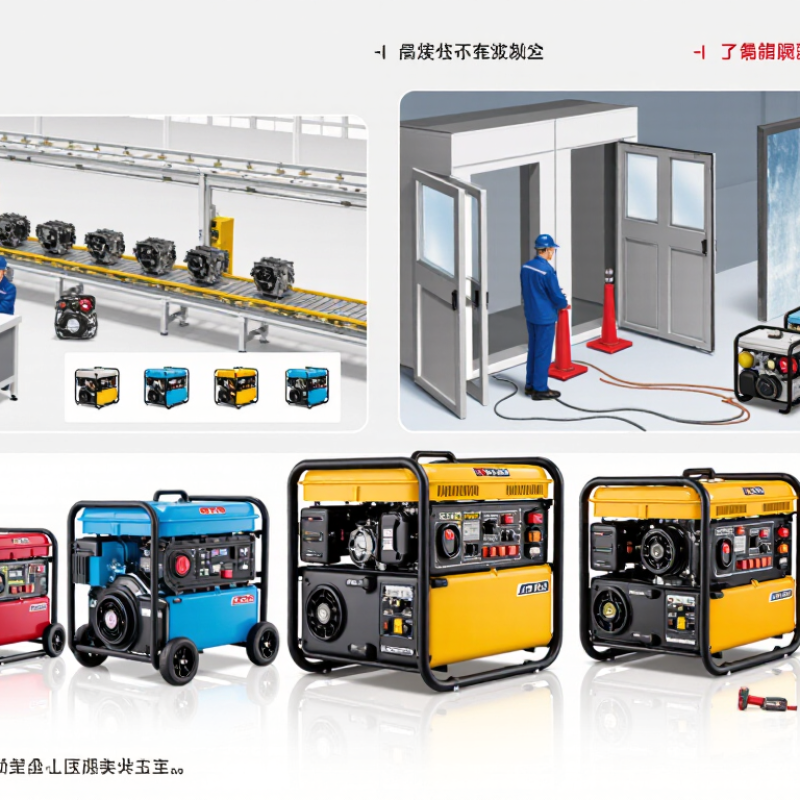
Chinese gasoline generator manufacturers commonly offer compact open-frame units for workshops, farms, and backup power, alongside quieter inverter models for sensitive electronics.

Small, but useful.

Typical output ranges from portable units suited to a few appliances to larger machines supporting tools or temporary site loads. Product options may include recoil or electric starting, wheels, fuel gauges, and low-oil shutdown. These features affect daily use, but they do not replace checking rated output, runtime, and service access.

Technology choices shape performance.

Conventional generators often use automatic voltage regulation, while inverter models electronically condition power and can adjust engine speed to demand. Many use air-cooled four-stroke engines, with overload protection and mufflers designed to reduce operating noise. Some models support parallel connection, though compatibility must be confirmed in the product documentation.

Details matter.

Buyers should compare continuous output rather than relying only on peak figures, and review noise readings, fuel-consumption conditions, and warranty terms. A catalog can make specifications look simpler than they are; test conditions differ, and published runtime may assume a light load. For a practical shortlist, ask for a clear specification sheet and available maintenance guidance.

How Can Buyers Compare Chinese Gasoline Generator Suppliers?

Comparing Chinese gasoline generator suppliers takes more than matching prices and rated power. Ask for the continuous output, not only the peak figure, and check whether the stated rating fits your intended load. A useful supplier should explain engine type, alternator design, fuel-tank capacity, noise level, and expected runtime under specific conditions. Ask for proof.

Request a test report for the exact model under consideration. It should show voltage stability, load performance, and inspection results, not just a generic product sheet. Clarify what is included: wheels, cables, spare parts, packaging, and operating instructions. Compare warranty coverage and response times in writing. Small details matter. A lower quote can become less attractive when essential accessories or support are missing.

Assess the supplier’s production and quality-control process through a factory visit or a live video walkthrough. Ask how units are inspected before shipment and how defects are handled. Check whether documentation matches your destination market’s requirements; standards and certification needs can vary. Samples help, but one successful test is not a guarantee of every production batch. I would also compare lead times and communication across several conversations, since a polished first reply tells you only so much.