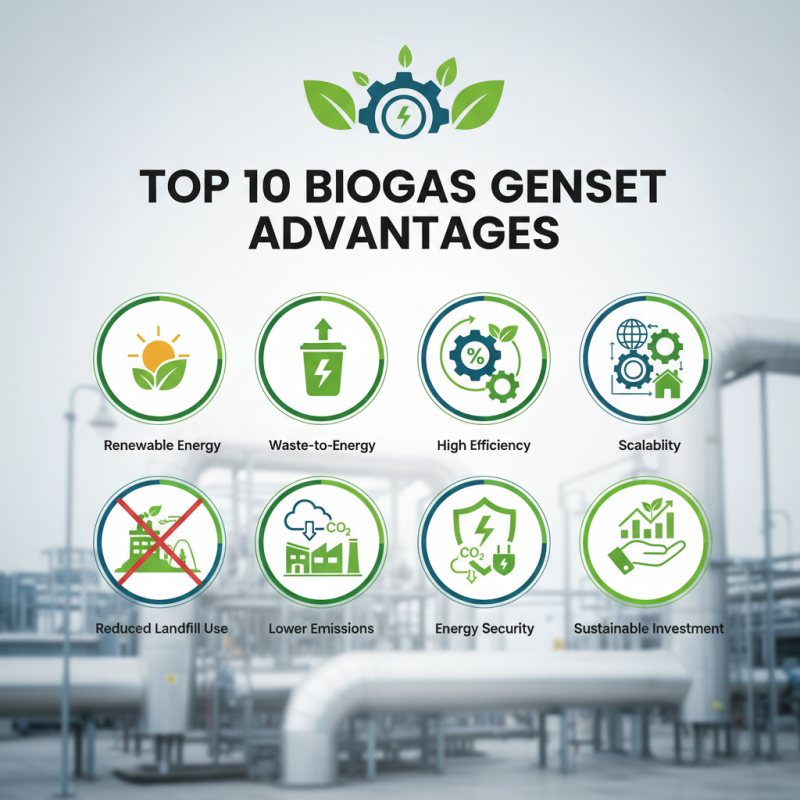
Biogas Gensets play a crucial role in the renewable energy landscape. As global demand for sustainable energy solutions grows, understanding the advantages of these systems is essential. Biogas Gensets convert organic waste into energy, offering an eco-friendly alternative to fossil fuels.
These systems are known for their efficiency and scalability. They can be implemented in diverse settings, from farms to large industrial sites. The ability to utilize waste materials reduces landfill use and greenhouse gas emissions. Moreover, Biogas Gensets provide energy security by generating power from locally sourced resources.
Investing in Biogas Gensets highlights a commitment to sustainability. However, buyers must evaluate specific needs and applications. Each installation presents unique challenges. The decision-making process requires careful consideration and reflection on these factors. Ultimately, understanding the advantages can lead to informed choices for a greener future.
Biogas gensets are increasingly recognized for their efficiency and sustainability in energy generation. These systems convert organic waste materials, such as agricultural residues and food waste, into biogas through anaerobic digestion. This biogas can then be used to power generators, providing renewable energy that reduces reliance on fossil fuels. According to the International Renewable Energy Agency (IRENA), biogas gensets can significantly reduce greenhouse gas emissions and contribute to energy independence.
Operating biogas gensets enhances waste management practices. Integrating this technology can lead to improved sanitation while generating energy. A recent study indicates that biogas can produce between 5 to 7 kWh of electricity per cubic meter of raw biogas. This translates into substantial savings on energy costs over time. However, the technology is not without its challenges. It requires careful management of feedstock quality and anaerobic digestion conditions to optimize performance.
Moreover, the implementation of biogas gensets may encounter regulatory hurdles. Different regions have varying rules regarding waste processing and energy generation practices. Adapting to these regulations can be an obstacle for potential adopters. Ongoing training and education are crucial for maximizing the benefits of biogas technology. The potential remains vast, but stakeholders must remain mindful of these complexities.

Biogas gensets are gaining traction in sustainable energy. These systems convert organic waste into electricity. They provide energy solutions that are both eco-friendly and efficient. Utilizing agricultural residues or food waste helps reduce landfill burden and greenhouse gas emissions.
One significant advantage is their ability to generate energy locally. This reduces dependency on fossil fuels and lowers transportation costs. Biogas gensets can be installed near agriculture sites or landfills. Another key aspect is their versatility. They can run on various types of biogas, providing flexibility in feedstock choice. However, their efficiency can vary based on the quality of biogas produced, which often requires careful management.
Moreover, biogas production also contributes to nutrient recycling. Digestate, a byproduct, is rich in nutrients and can be used as fertilizer. While these systems have numerous benefits, challenges like initial setup costs can be a hurdle for some users. Assessing local market conditions is vital for success. Understanding the balance between investment and environmental impact is essential for global buyers considering biogas gensets.
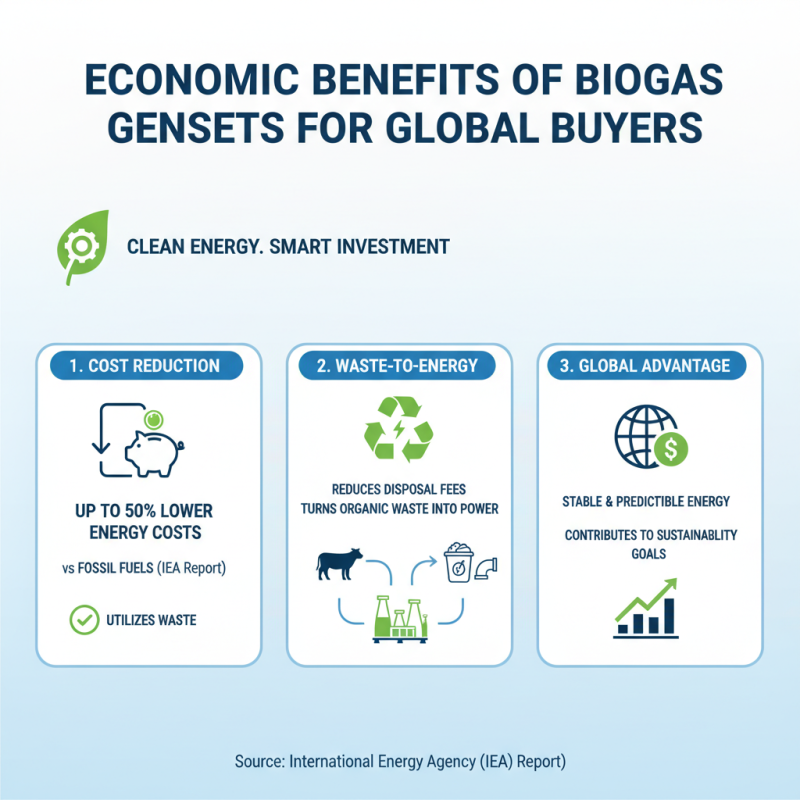
The global shift toward renewable energy sources has highlighted biogas gensets as a viable option. Their economic benefits are significant for buyers looking to invest wisely. According to a report by the International Energy Agency (IEA), biogas production can reduce energy costs by up to 50% compared to conventional fossil fuels. This reduction stems from utilizing waste materials that would otherwise incur disposal fees.
Operational savings are crucial for businesses. Many facilities using biogas gensets report lower maintenance costs. For example, a study from the Biogas Association noted that biogas systems require less frequent servicing due to the nature of their operation. Moreover, the availability of feedstock, often sourced locally, minimizes transportation costs, enhancing overall economic viability.
While the financial advantages are clear, buyers should consider the initial investment. High upfront costs for installation can deter some. A 2022 market analysis highlighted that average installation costs range from $1,000 to $3,000 per kilowatt. This can make financing crucial for many operators. Aligning expectations with these realities is essential for successful implementation.
The environmental impact of biogas gensets is significant. These systems convert organic waste into renewable energy. They reduce greenhouse gas emissions effectively. Utilizing biogas helps lower landfill waste and minimizes methane release. This transition supports a cleaner atmosphere and promotes sustainability.
Tips: Consider local organic waste sources for a biogas project. This benefits both the environment and community resources.
Biogas gensets offer a reliable source of energy. They are versatile and can be used in diverse applications. The reliability of these systems reduces dependence on fossil fuels. However, the initial setup can be challenging. It requires careful planning and investment.
Tips: Partnering with experts in biogas technology can streamline the installation process. Seek out professionals with experience and proven success.
Understanding the resource potential is key. Biogas gensets can generate power while managing waste efficiently. They can convert agricultural, industrial, and municipal waste into valuable energy. Monitoring and maintaining these systems is essential to ensure optimal performance.
| Advantage | Description | Environmental Impact | Sustainability Factor |
|---|---|---|---|
| Renewable Energy Source | Biogas gensets utilize organic waste to produce energy. | Reduces reliance on fossil fuels. | Highly sustainable with constant input supply. |
| Waste Management | Helps in managing agricultural and organic waste efficiently. | Lowers landfill waste and associated emissions. | Encourages recycling and circular economy practices. |
| Greenhouse Gas Reduction | Mitigates methane emissions from decomposing organic matter. | Significantly reduces GHG impact. | Contributes to climate change mitigation efforts. |
| Energy Independence | Enables regions to produce their own energy locally. | Enhances energy security and resilience. | Promotes local economies and reduces energy poverty. |
| Job Creation | Biogas projects create local jobs in construction and maintenance. | Supports community development and livelihoods. | Sustains local economic growth. |
| Versatile Applications | Can be used for electricity generation, heating, or vehicle fuel. | Reduces overall carbon footprint. | Offers diverse energy solutions for various needs. |
| Cost-Effectiveness | Reduces energy costs over time through local generation. | Decreases dependence on imported fuels. | Provides long-term financial savings. |
| Nutrient-Rich Byproduct | Digestate from biogas production can be used as fertilizer. | Enhances soil health and agricultural productivity. | Supports sustainable farming practices. |
| Scalability | Easily scalable from small to large installations. | Adapts to different waste management needs. | Meets growing energy demands flexibly. |
| Community Engagement | Encourages local participation in energy projects. | Builds awareness about renewable energy benefits. | Strengthens community ties and cooperation. |
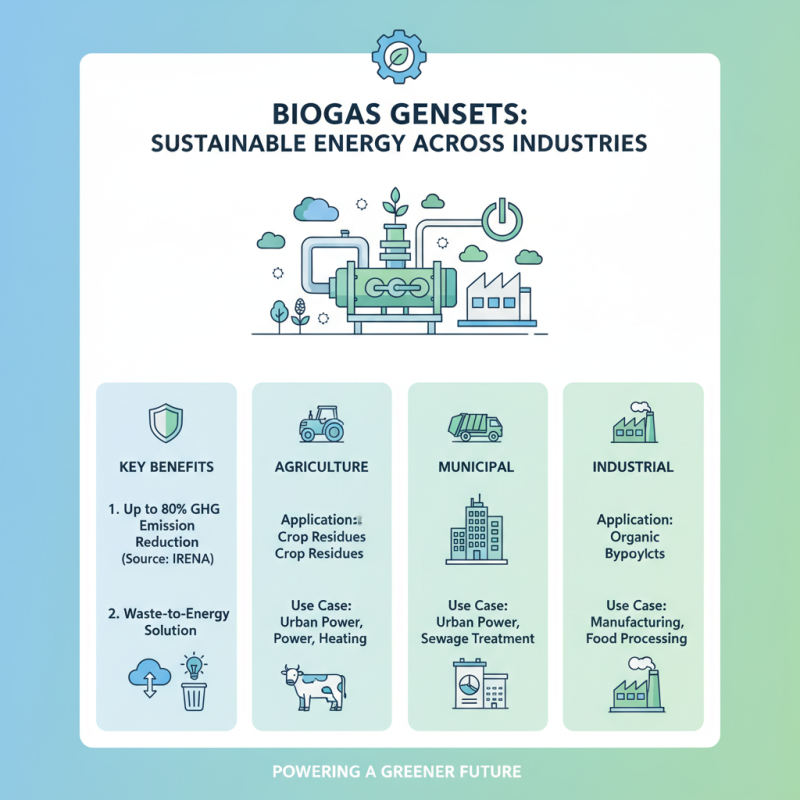
Biogas gensets offer a sustainable energy solution across various industries. Their applications extend from agricultural waste management to municipal solid waste processing. According to a report by the International Renewable Energy Agency (IRENA), biogas utilization can reduce greenhouse gas emissions by up to 80%. This is a compelling factor for industries looking to improve their environmental footprint.
In agriculture, biogas gensets convert animal manure and crop residues into electricity. This process not only generates renewable energy but also helps manage waste effectively. A study by the Food and Agriculture Organization (FAO) noted that utilizing biogas can reduce fertilizer costs and enhance soil health. Such benefits can promote a circular economy, where waste is transformed into a valuable resource.
The food and beverage industry also benefits significantly from biogas gensets. They can process organic waste, producing energy while minimizing landfill contributions. However, operational challenges exist, such as the need for consistent feedstock quality. Inconsistent input can affect gas production efficiency, requiring careful management. Despite these challenges, the potential of biogas remains vast, with applications that can transform waste into energy sustainably.