2026 Top Tri Fuel Generators for Ultimate Power Versatility?
In today’s fast-paced world, having access to reliable power is crucial. Tri Fuel Generators offer unmatched versatility for various needs. They can operate on gas, propane, and natural gas. This adaptability makes them invaluable for both home and outdoor use.
Imagine a camping trip where you can power your devices without worrying about fuel limitations. Your family could enjoy warm meals, lighting, and even a portable fridge. Tri Fuel Generators can easily meet these demands, but they also require attention. Knowing which fuels work best in different situations is key to optimizing performance.
Choosing the right Tri Fuel Generator involves understanding your specific needs. Some models may be quieter, while others provide more power. Each option has its pros and cons. Reflect on your requirements and consider the environmental impact of your fuel choices. With so many options in 2026, it’s essential to select wisely for ultimate power versatility.

2026 Tri Fuel Generators: Introduction to Power Versatility and Efficiency
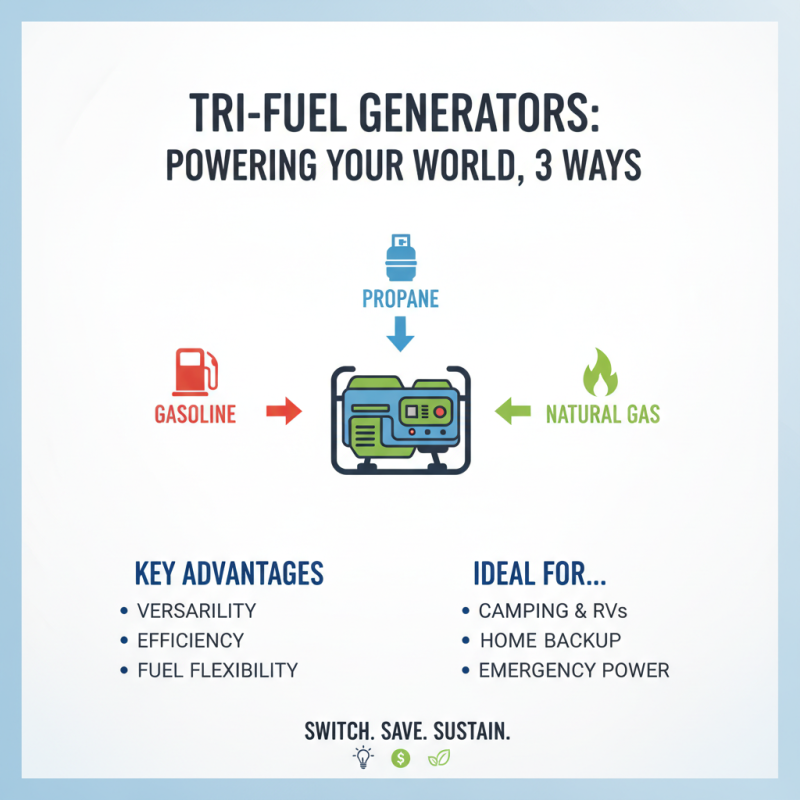
Tri fuel generators are gaining popularity for their versatility and efficiency. They can run on three different fuel types: gasoline, propane, and natural gas. This flexibility is advantageous in various situations, from camping trips to emergency power outages. With the ability to switch fuels easily, users can choose the most convenient or cost-effective option.
When selecting a tri fuel generator, consider the power output. Different models provide different wattages. Think about your essential power needs. Do you require energy for high-demand appliances? Or is it just for basic lights and devices? Knowing your requirements is crucial. Power management can be tricky. Sometimes, less is more.
**Tip:** Always check fuel compatibility before purchasing. Not all generators handle every type equally well. Fuel efficiency also varies by type. Know your usage patterns.
Another important aspect is portability. Many tri fuel generators come with wheels. However, weight can be an issue. A lightweight model might be perfect for camping, while heavier models may suit more permanent setups. Think about where you will use it most. It’s also vital to consider noise levels. Some generators can be quite loud. Choose wisely to avoid disturbing the peace.
Key Features of Top Tri Fuel Generators in 2026: What to Look For
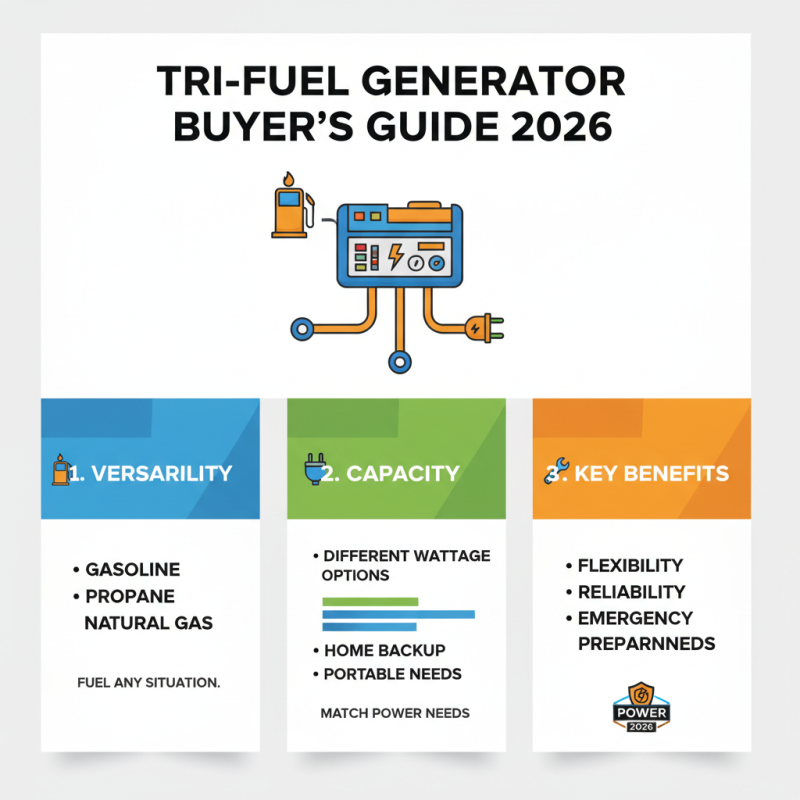
When choosing a tri fuel generator in 2026, consider its versatility. A good generator should operate on gasoline, propane, and natural gas. This flexibility ensures you can find fuel in any situation. Capacity is crucial. Look for products that offer different wattage options to suit various power needs.
Tips: Assess your power demands. Calculate the total wattage required for your devices. This helps in selecting the right generator size. Balance portability with power. Some models are lightweight but may not provide sufficient power.
Efficiency is another key feature. A generator that conserves fuel can save money in the long run. Noise levels matter too. Some generators are quieter, making them ideal for residential use.
Tips: Always check the decibel rating. A quieter model is often a better choice for camping or home use.
Cost is an important consideration. While some generators may seem affordable, ongoing fuel and maintenance costs can add up. Think about the long-term investment rather than just the initial price. Remember, not every high-end unit meets all needs effectively. Prioritize features that truly matter for your specific requirements.
Performance Comparisons: Tri Fuel Generators vs. Traditional Power Sources
Tri fuel generators are gaining popularity for their versatility. They can run on natural gas, propane, or gasoline. This flexibility offers advantages over traditional power sources. They are useful for homes, emergency situations, or off-grid power.
When comparing tri fuel generators to traditional options, efficiency comes into play. Tri fuel generators can switch fuels based on availability, ensuring constant power. In contrast, traditional generators usually rely on one fuel, which may not always be easy to find. However, managing multiple fuel types can be tricky. You may need extra storage space for different fuel types.
Tip: Always check local regulations regarding fuel storage. This ensures compliance and safety. Another tip is to prepare for maintenance difficulties. Tri fuel systems often have more complex components. Choose a generator that suits your experience level.
In terms of noise, tri fuel generators might operate quieter than some traditional models. However, this isn’t guaranteed. User experiences can vary widely. Take your time to read reviews before making decisions. Consider your own needs carefully and prioritize features that truly matter to you.
2026 Top Tri Fuel Generators Performance Comparison
Market Trends and Innovations in Tri Fuel Generator Technology (2026)
Tri fuel generators are gaining popularity in various sectors. These generators run on natural gas, propane, or gasoline, providing users with remarkable flexibility. This versatility caters to different needs and situations, from outdoor adventures to emergency power supply during outages. The ability to switch fuel sources improves convenience and ensures reliability.
Market trends show increasing innovations in tri fuel technology. Manufacturers are focusing on making these generators more efficient and user-friendly. Features like automatic fuel selection and advanced noise reduction technologies are becoming standard. Consumers now seek products that are not only powerful but also environmentally friendly. Yet, there are challenges. The complexity of multiple fuel options can create confusion for some users.
Furthermore, price fluctuations in fuel sources also impact choices. High efficiency often comes at a higher cost upfront. This raises questions about the return on investment. Potential users need to reflect on their actual power requirements before purchasing. Making informed choices is essential to minimize dissatisfaction later.
2026 Top Tri Fuel Generators for Ultimate Power Versatility
| Model |
Power Output (W) |
Fuel Type |
Runtime (hrs) |
Weight (lbs) |
Noise Level (dBA) |
Price ($) |
| Model A |
7500 |
Gas, Propane, Natural Gas |
10 |
120 |
58 |
999 |
| Model B |
9500 |
Gas, Propane, Natural Gas |
12 |
135 |
60 |
1199 |
| Model C |
6000 |
Gas, Propane, Natural Gas |
9 |
110 |
55 |
749 |
| Model D |
8000 |
Gas, Propane, Natural Gas |
11 |
130 |
57 |
899 |
| Model E |
10000 |
Gas, Propane, Natural Gas |
15 |
140 |
62 |
1299 |
Top Brands and Models of Tri Fuel Generators for Optimal Power Solutions
When considering tri fuel generators, versatility is key.
These generators can run on gasoline, propane, and natural gas. This flexibility allows you to choose the best fuel type based on availability and cost. Many users find this convenience essential during power outages or outdoor activities.
Several popular models stand out for their performance. They offer impressive wattage output and fuel efficiency. However, not all models are created equal. Some may struggle with noise levels. Others might fall short in portability. It's crucial for buyers to weigh these factors.
Maintenance requirements can also vary. Some models demand frequent servicing, which can be a hassle. Users should look for generators that simplify upkeep while ensuring reliability. This attention to detail can make a significant difference in long-term satisfaction. Ultimately, selecting the right tri fuel generator requires careful consideration of both specifications and personal needs.

 Sinotruk Parts
 Shacman Parts
 FAW Parts
 Dongfeng Parts
 Foton Parts
 CHENGLONG PARTS
 Golden Dragon Bus Parts
 King Long Parts
 Yutong Parts
 Higer Parts
 Zhongtong Parts
 Ankai Parts







 Mr. Perry Wu International Sales Director