How to Choose the Best Dynamo Generator for Your Needs?
Choosing the right Dynamo Generator is crucial for various needs. With many options available, understanding your specific requirements is essential. A Dynamo Generator converts mechanical energy into electrical energy. This process can power tools, appliances, or backup systems.
Consider factors like power output, portability, and fuel type. Each situation demands a different approach. For instance, a camping trip requires a small, lightweight model. A home-based setup may need a more robust, stationary generator.
It’s vital to research brands and reviews. Not all generators are created equal. A well-reviewed product often indicates reliability and quality. However, user experiences may vary, suggesting a need for careful consideration. Reflecting on how you plan to use the Dynamo Generator can lead to better choices. Always prioritize efficiency and durability to meet your demands.
Understanding the Different Types of Dynamo Generators
When choosing a dynamo generator, understanding the different types available is crucial. There are primarily two categories: permanent magnet generators and electromagnetic generators.
Permanent magnet generators are often favored for their compact size and higher efficiency.
Reports indicate they can achieve up to 85% efficiency. This makes them ideal for small-scale applications, such as powering tools or small appliances.
Electromagnetic generators, on the other hand, are more versatile and can be used in larger setups. They typically feature higher power outputs and can be easier to maintain. Interestingly, a study conducted by the International Energy Agency found that electromagnetic generators often exceed 90% efficiency under optimal conditions. However, they can be heavier and pricier, factors that should be considered based on your specific needs.
Selecting the right type hinges on the intended use and available budget. Users should reflect on their energy requirements and consider which generator aligns best. Mistakes often arise when users overestimate their power needs or underappreciate the maintenance demands of each type. Be prepared to reassess priorities based on both performance and practicality.
Evaluating Your Power Requirements for a Dynamo Generator
When evaluating your power requirements for a dynamo generator, start with understanding your energy needs. The amount of power you require can determine the type of generator you should consider. According to the U.S. Department of Energy, typical household energy consumption is around 877 kWh per month. This translates to about 30 kWh per day. Knowing this, you can better assess how a dynamo generator fits into your power strategy.
Tip: Calculate your daily power demand by listing your essential devices. Consider wattage and usage time for each. This exercise helps in choosing the correct generator size.
Additionally, think about peak power requirements. Some devices need more energy at startup than during regular use. For instance, a refrigerator may draw 1,200 watts at startup, but only 200 watts during operation. Neglecting this could lead to inadequate performance and generator strain.
Tip: Always include a safety margin in your power calculations. This ensures the generator runs smoothly, preventing potential overload.
Reflect on your specific context. Factors like location and environment can influence your choice. If you live in an area prone to outages, a higher capacity generator may be essential. But don’t overlook the noise levels and fuel efficiency, which affect both the usability and cost of ownership.
Assessing the Quality and Reliability of Dynamo Generators
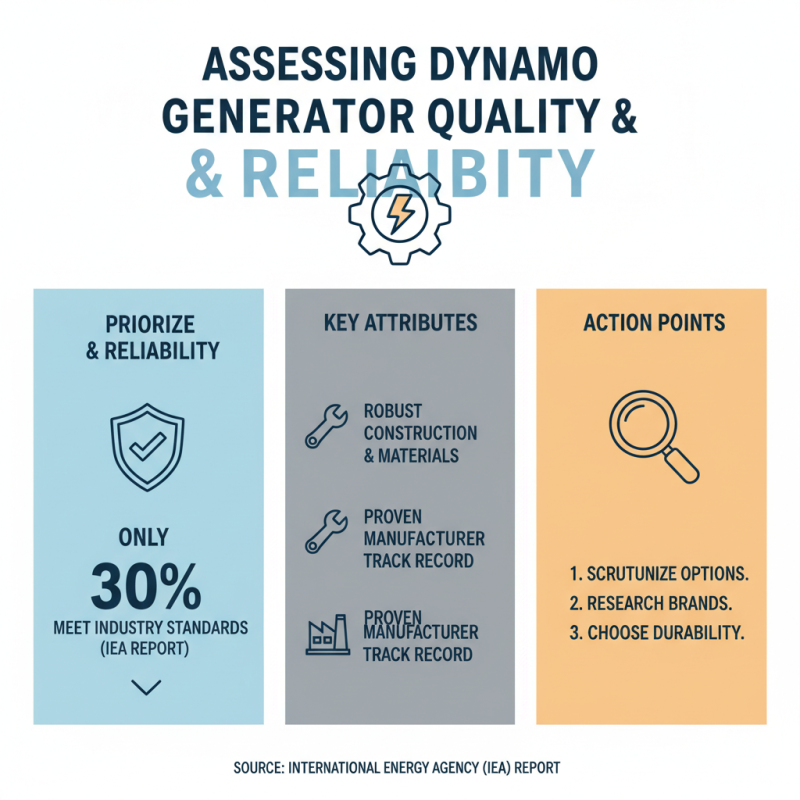
When selecting a dynamo generator, quality and reliability should be your priority. A report by the International Energy Agency (IEA) indicates that only 30% of dynamo generators meet industry standards for performance and durability. This means that careful scrutiny of options is essential. Look for generators with robust construction and high-quality materials. Reliability often correlates with the manufacturer’s reputation in the industry, so prioritize those with proven track records.
User reviews can provide insight into real-world performance. Remarkably, data from Consumer Reports shows that units with consistently high ratings often last up to 20% longer than their counterparts. Users frequently note critical features like ease of maintenance and fuel efficiency. Look for models that offer thorough documentation and warranty support. Low-quality generators may save you money upfront but can lead to costly repairs or replacements down the line, emphasizing the need for a thoughtful investment.
Keep an eye on the specifications that matter most. Energy output, weight, and noise levels are all factors that affect operational efficiency. An overwhelming 50% of users report dissatisfaction due to noise during usage, highlighting a crucial consideration for residential areas. Therefore, it’s wise to balance power needs with environmental impacts. A generator that fits your needs today may not be sufficient in the long run, so remain flexible in your selection criteria.
Key Features to Look for in a Dynamo Generator
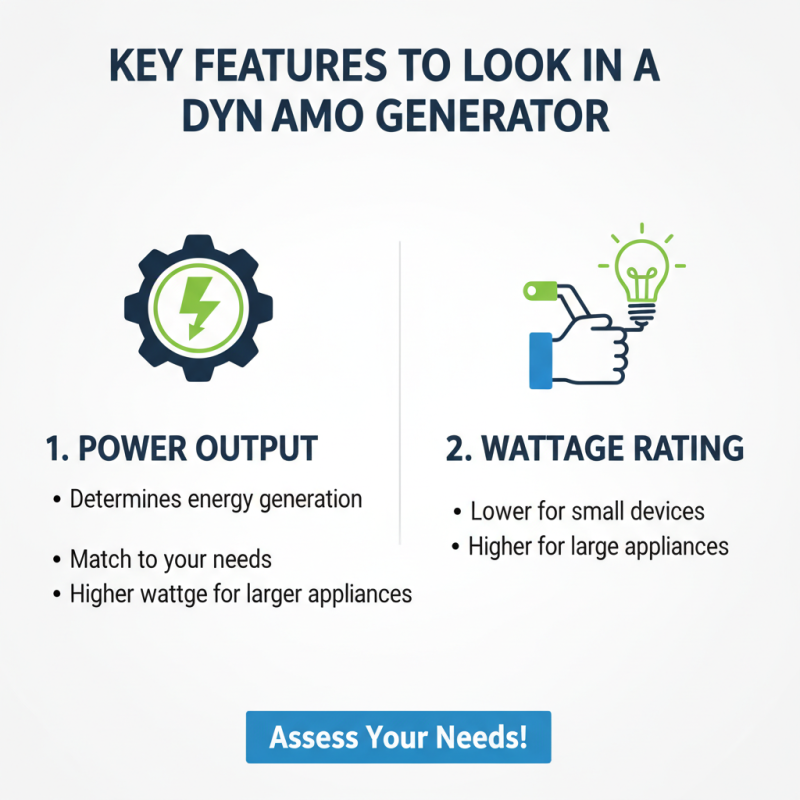
When selecting a dynamo generator, understanding key features is essential. Look for power output. This determines how much energy you can generate. Assess your needs and match them to the generator's specifications. A unit with lower wattage may suffice for small devices, but larger appliances will require more power.
Portability is another critical factor. If you plan to take the generator on trips, weight and size matter. Some models are bulky but powerful, while others are compact yet efficient. Test the weight if possible. It can feel different than expected. Ensure you can handle it easily.
Durability plays a significant role too. Look for sturdy materials. Generators are often used in various environments. Weather resistance can prevent rust and extend lifespan. Read reviews to see how models hold up over time. Don't overlook this aspect. A generator that fails prematurely can lead to frustration.
**Tips**: Consider noise levels. Some generators are quieter than others, which can be important for camping. Always check customer feedback for real-world performance insights. Understanding features like fuel type can improve efficiency and availability. Make informed choices based on your situation.
Comparing Pricing and Brands of Dynamo Generators
When selecting a dynamo generator, it’s essential to compare various brands and price points. Pricing can vary significantly based on features and power output. Lower-end models may cost a few hundred dollars, while high-end generators can surpass a thousand. This wide range reflects differences in efficiency and durability.
It’s beneficial to assess customer reviews and expert ratings. Many users highlight discrepancies in performance and reliability among brands. A generator that seems inexpensive may not provide the promised power or longevity. Choosing a renowned brand often comes with better customer service and warranty options. However, don’t overlook smaller or less-known brands that might offer excellent performance for a lower price.
Consider the specific requirements of your projects before making a decision. Power needs, portability, and fuel type are crucial factors. Some models may excel in durability but lack portability. On the other hand, lighter units might not handle heavy-duty tasks as effectively. Evaluating your priorities can ensure the best match for your needs. Remember, the most expensive option isn’t always the best; understanding unique requirements is key.
Comparison of Dynamo Generator Power Outputs

 Sinotruk Parts
 Shacman Parts
 FAW Parts
 Dongfeng Parts
 Foton Parts
 CHENGLONG PARTS
 Golden Dragon Bus Parts
 King Long Parts
 Yutong Parts
 Higer Parts
 Zhongtong Parts
 Ankai Parts






 Mr. Perry Wu International Sales Director