What Are the Best China Genset Generators?
Choosing the best China Genset Generators requires more than comparing rated power or purchase prices. Electricity demand is becoming less predictable, while factories, hospitals, construction sites, and data facilities need stable backup power. The IEA Electricity 2024 report forecasts global electricity demand to grow by an average of 3.4% annually through 2026. That pressure makes generator efficiency, response time, and service support increasingly important.
China has become a major manufacturing base for diesel, gas, and hybrid generator systems. Industry reviews from the China Electricity Council highlight rising electricity consumption and continued peak-load challenges across the country. In practical applications, a reliable genset should start smoothly after long standby periods, maintain voltage under changing loads, and operate safely in dusty or humid environments. Small details matter. Fuel filtration, radiator design, alternator quality, and controller protection can decide whether a unit performs well at 2 a.m.
The best choice is not always the cheapest model. It should match the load profile, altitude, climate, duty cycle, and local emissions requirements. ISO 8528 provides a useful technical framework for rating and testing reciprocating engine generator systems. However, compliance documents alone do not prove field reliability. Buyers should examine factory test records, warranty terms, spare-parts availability, and service response times.
No ranking is perfect. Real projects differ. Some Chinese manufacturers offer strong value, while others still need improvement in documentation or overseas support. This guide compares leading China Genset Generators through measurable performance, engineering experience, independent specifications, and practical ownership considerations.
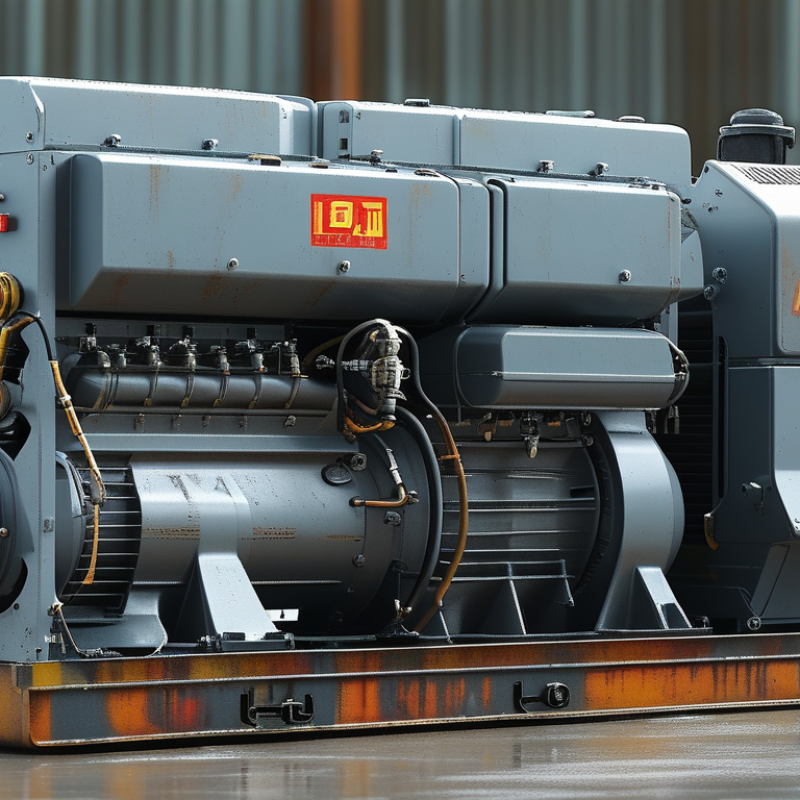
China Genset Basics: 50 Hz, 400/230 V, and 1,500 rpm Systems
China genset generators commonly use a 50 Hz, 400/230 V configuration. In a three-phase system, 400 V is measured between phases, while 230 V serves single-phase loads. A four-pole alternator must rotate at 1,500 rpm to produce 50 Hz. This relationship is basic, but it is often overlooked during site planning.
The IEA Electricity 2024 report forecasts global electricity demand to grow by an average of 3.4% annually from 2024 to 2026. That pressure makes dependable standby power more important for factories, warehouses, and construction sites. Field checks should include voltage stability, phase balance, frequency recovery, and performance during sudden motor starts. ISO 8528 guidance also separates emergency, standby, and prime-power duties, so one rating cannot fit every project.
Look closely at the control panel. It should display frequency, line voltage, running hours, oil pressure, and coolant temperature. A 400/230 V unit may still perform poorly if the load is badly distributed. I have seen installations pass no-load tests yet struggle when pumps started together. That weakness is easy to miss. Fuel quality, ventilation, ambient temperature, and cable length also affect real output. A careful buyer should request witnessed load-bank testing, not rely only on a catalogue sheet.
ISO 8528 Ratings: Prime, Standby, and Continuous-Duty Output
What Are the Best China Genset Generators?
The best China genset generator is not always the largest model. Its ISO 8528 rating must match your actual duty. Emergency Standby Power, or ESP, supports a facility during utility failure. It suits hospitals, offices, and temporary emergency loads. Standby units usually run only during outages, not as daily power sources.
Prime Power, or PRP, handles variable loads for long operating periods. It fits construction sites, remote workshops, and unstable grids. However, load changes, altitude, ambient heat, and maintenance intervals affect performance. Continuous Operating Power, or COP, supports a steady load for unlimited annual hours. It is useful for isolated facilities with predictable demand. A rating label alone cannot reveal the whole operating story.
Tips: Record the real load profile before buying. Measure motors during starting, not only their running watts. Ask for ISO 8528 test records, fuel data, cooling limits, and service procedures. Check performance at 40°C and your site altitude. A small mistake here can create a large fuel bill. I have seen projects choose PRP while expecting COP behavior. That choice needs careful review. Also, leave practical capacity headroom, but avoid oversizing. Light loading can cause poor combustion, wet stacking, and shorter service intervals.
Compare 10–2,000 kVA Sets, 75% Load Fuel Use, and Noise in dB(A)
Choosing the best China-built genset starts with the duty, not the badge. Available sets commonly span 10–2,000 kVA, but one performance curve cannot suit every site. A 10 kVA unit may support a small workshop, while a 2,000 kVA set can feed a factory section. Check the prime or standby rating before comparing prices. At 75% load, fuel consumption becomes a useful comparison point. For example, a 100 kVA diesel set may use roughly 18–24 liters per hour, depending on engine efficiency and site conditions. A larger set does not automatically save fuel when lightly loaded.
Noise needs equal attention. Manufacturers often quote sound pressure in dB(A), commonly measured at seven meters. A quiet enclosure may record 65–72 dB(A), while an open-frame set can exceed 85 dB(A). These figures change with distance, reflective walls, exhaust design, and microphone position. Ask for a test report, not only a catalogue promise. During commissioning, check beside the control panel and near the property boundary. A reading acceptable indoors may still disturb nearby workers. Some comparisons remain incomplete because fuel and noise tests use different loads.
Tips: Request fuel data at 25%, 50%, 75%, and 100% load. Confirm whether readings include the radiator fan and exhaust system. Match kVA to starting currents, not only running watts. Keep a written log during commissioning. Small errors become expensive over months.
What Are the Best China Genset Generators? - Compare 10–2,000 kVA Sets, 75% Load Fuel Use, and Noise in dB(A)
Typical comparison of diesel generator sets by rated capacity, fuel consumption at 75% load, and acoustic performance.
Rated Capacity
(kVA) |
Approx. Rated Output
(kW at 0.8 PF) |
Useful Output at 75% Load
(kW) |
Typical Fuel Use at 75% Load
(L/h) |
Approx. Fuel Use
(L/kWh) |
Open-Frame Sound Level
at 7 m, dB(A) |
Silenced Canopy Sound Level
at 7 m, dB(A) |
Typical Application |
| 10 |
8 |
6 |
1.8–2.4 |
0.30–0.40 |
72–78 |
58–65 |
Small offices, retail backup, telecom equipment |
| 20 |
16 |
12 |
3.4–4.5 |
0.28–0.38 |
74–80 |
60–67 |
Small commercial buildings and workshops |
| 30 |
24 |
18 |
5.0–6.5 |
0.28–0.36 |
75–81 |
62–68 |
Shops, farms and light industrial loads |
| 50 |
40 |
30 |
8.3–10.5 |
0.28–0.35 |
77–83 |
64–70 |
Small factories, restaurants and construction sites |
| 75 |
60 |
45 |
12–15.5 |
0.27–0.34 |
79–85 |
66–72 |
Medium commercial facilities and agricultural systems |
| 100 |
80 |
60 |
16–20 |
0.27–0.33 |
80–86 |
68–74 |
Warehouses, offices and standby power systems |
| 150 |
120 |
90 |
23–29 |
0.26–0.32 |
82–88 |
70–76 |
Hotels, schools and medium-sized plants |
| 200 |
160 |
120 |
30–37 |
0.25–0.31 |
83–89 |
71–77 |
Industrial backup, hospitals and data rooms |
| 300 |
240 |
180 |
44–54 |
0.24–0.30 |
84–90 |
72–78 |
Manufacturing plants and large commercial buildings |
| 400 |
320 |
240 |
58–70 |
0.24–0.29 |
85–91 |
73–79 |
Factories, logistics centers and infrastructure projects |
| 500 |
400 |
300 |
71–85 |
0.24–0.28 |
86–92 |
74–80 |
Heavy industry and large standby installations |
| 750 |
600 |
450 |
104–123 |
0.23–0.27 |
87–93 |
75–81 |
Mining, utilities and high-load industrial sites |
| 1,000 |
800 |
600 |
137–160 |
0.23–0.27 |
88–94 |
76–82 |
Data centers, hospitals and major infrastructure |
| 1,250 |
1,000 |
750 |
170–200 |
0.23–0.27 |
89–95 |
77–83 |
Large industrial plants and utility support |
| 1,500 |
1,200 |
900 |
204–240 |
0.23–0.27 |
90–96 |
78–84 |
Heavy manufacturing and emergency power plants |
| 2,000 |
1,600 |
1,200 |
270–320 |
0.23–0.27 |
91–97 |
79–85 |
Large-scale industry, utilities and prime-power applications |
Technical basis: Values are representative engineering ranges for modern diesel generator sets operating at 50 Hz, with a 0.8 power factor and 75% electrical load. Fuel consumption varies with engine efficiency, alternator design, ambient conditions, fuel quality and auxiliary equipment. Sound levels are typical A-weighted levels measured approximately 7 m from the set in free-field conditions; actual site readings may change because of enclosure design, exhaust treatment, reflections and installation layout.
Top China Genset Platforms: Weichai, Yuchai, and Cummins-Powered Sets
Choosing a China-built genset depends on the engine platform, not only the price label. Three widely discussed options include a heavy-duty domestic platform, a fuel-efficient domestic platform, and an internationally licensed engine platform. Each serves different operating conditions.
The first platform suits factories, construction sites, and long daily workloads. Its strong low-speed torque helps during motor starting and sudden load changes.
The second platform often appeals to farms, workshops, and commercial buildings. It can offer practical fuel consumption and accessible parts support in many regions. However, actual performance varies with calibration, altitude, and maintenance quality.
The internationally licensed platform is commonly selected for hospitals, data rooms, and backup systems needing stable control. It usually supports familiar monitoring systems and established service procedures.
During inspections, check the radiator size, alternator insulation, controller records, and fuel-system cleanliness. A cold start test reveals more than a polished brochure. Listen for uneven combustion. It matters.
From field experience, oversizing is not always safer. A lightly loaded engine may suffer from wet stacking and inefficient fuel use. Undersizing creates frequent overload alarms and shortened component life.
Buyers should request load-bank test results, spare-parts lead times, and service response details. I have seen attractive quotations hide expensive wiring changes. That risk deserves attention.
Even reliable platforms can disappoint when installation design is careless.
Selection Criteria: Emissions, 24/7 Service, Warranty, and Total Cost
Choosing a China-built genset starts with emissions, not the quoted purchase price.
Ask for engine test reports, certification records, and operating data at 50%, 75%, and 100% load. A clean-looking datasheet may hide higher fuel use during partial-load operation. Measure exhaust treatment needs, noise limits, and fuel quality requirements at the installation site. Keep records. Independent inspection before shipment can reveal wiring errors, loose terminals, or undersized breakers.
For hospitals, factories, and data rooms, 24/7 service must mean more than an email address.
Request a written response time, local technician coverage, spare-parts stock, and escalation contacts. Ask how faults are diagnosed at 2 a.m., when remote support cannot solve a controller alarm. A practical test is a simulated call during commissioning. It exposes weak arrangements. Warranty language deserves equal attention. Check coverage for the engine, alternator, controller, batteries, labor, travel, and consequential downtime. Some warranties exclude dust, poor fuel, skipped maintenance, or unauthorized adjustments. Those exclusions may be reasonable, but they need clear evidence requirements.
Total cost includes fuel, oil, filters, batteries, transport, installation, testing, and scheduled overhauls.
Compare costs over five years, using your actual load profile rather than the maximum rating. A cheaper unit can become expensive after frequent blackouts and delayed parts. I would also price one complete maintenance visit, including technician travel and consumables. No checklist is perfect. Recheck assumptions after a site load test, because real demand often differs from the design spreadsheet.

 Sinotruk Parts
 Shacman Parts
 FAW Parts
 Dongfeng Parts
 Foton Parts
 CHENGLONG PARTS
 Golden Dragon Bus Parts
 King Long Parts
 Yutong Parts
 Higer Parts
 Zhongtong Parts
 Ankai Parts



 Mr. Perry Wu International Sales Director