2026 Top Silent Genset Innovations and Trends to Watch?
As we approach 2026, the landscape of power generation is evolving rapidly. Silent gensets are at the forefront of this transformation. These units, designed for minimal noise output, are becoming essential in various sectors. According to recent market analysis, the silent genset market is projected to grow at a CAGR of over 5% by 2026. This trend indicates a rising demand for quieter, more efficient power solutions in urban areas.
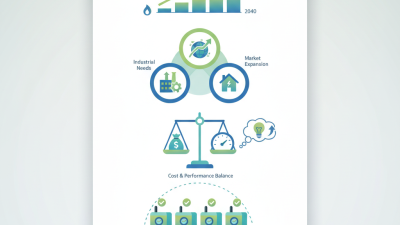
The innovations in silent genset technology address significant challenges. For instance, advancements in fuel efficiency and noise reduction are crucial. New designs utilize smart technologies, improving reliability while reducing environmental impact. Yet, some manufacturers still struggle to balance cost and performance. It's vital for the industry to focus on sustainable solutions without compromising on quality.
As silent genset technology continues to evolve, understanding industry trends becomes essential. Businesses need to stay informed about emerging technologies to remain competitive. Notably, the integration of IoT in gensets could change how we use and monitor these machines. However, some concerns about data security must be addressed.

Overview of Silent Genset Technology Advancements in 2026
In 2026, silent gensets are evolving rapidly. These advancements focus on reducing noise and improving efficiency. New soundproofing technologies are being developed. These include advanced insulation materials and sound-dampening designs. Such innovations aim to make operations smoother, especially in urban areas.
Battery integration is becoming more common. Silent gensets can now work in conjunction with renewable energy sources. This hybrid approach not only saves fuel but also limits noise. Some models feature advanced monitoring systems. These systems allow users to track performance and emissions in real-time.
But challenges remain. The balance between power output and noise reduction is difficult to achieve. Some users may still experience performance issues. Also, maintenance requirements can be higher for these advanced gensets. Regular checks are essential for optimal performance. As these technologies progress, feedback from users will guide future improvements.
Key Innovations in Noise Reduction for Gensets
As the demand for quieter power solutions increases, the genset industry is witnessing crucial innovations in noise reduction. According to a 2023 report by the Global Energy Agency, noise pollution from generators can exceed 100 decibels, which is harmful to human health and the environment. Manufacturers are now focusing on reducing noise levels significantly. Advances in acoustic enclosures can now lower noise output to below 50 decibels, making them suitable for urban areas.
One innovation involves using advanced sound-absorbing materials. These materials are lightweight and highly effective in dampening noise. Some companies are experimenting with virtual acoustic technology to create quieter engines. This shift reflects a growing awareness of environmental impacts tied to noise. Yet, challenges remain in balancing cost and performance without sacrificing power.
Tips: Regular maintenance of your genset can help ensure optimal performance and efficiency. Check noise levels frequently to stay compliant with regulations.
In addition, integrating quieter internal components can also maximize noise reduction. However, optimizing these systems can increase complexity. Achieving efficiency alongside noise reduction requires careful engineering. As trends evolve, adapting to these changes may present obstacles, but the benefits to society are undeniable.
2026 Top Silent Genset Innovations and Trends to Watch
Emerging Trends in Fuel Efficiency and Sustainability
The push for fuel efficiency and sustainability in silent generator technology is undeniable. According to a recent industry report, silent gensets can lead to a 30% reduction in fuel consumption compared to older models. This efficiency drives down operational costs, crucial for businesses focused on the bottom line. Moreover, advanced technologies are emerging, such as hybrid systems that integrate renewables. These innovations could reduce the carbon footprint significantly.
Sustainability is not just a buzzword; it’s becoming essential. The global market for eco-friendly gensets is projected to grow by 15% annually. This growth reflects a shift in consumer preferences, as more companies are prioritizing sustainability in their operations. Silent generators now often use biofuels, which can cut greenhouse gas emissions by 50%. Yet, this transition isn't flawless. Transitioning to greener technologies requires careful planning and investment.
Despite these advancements, challenges persist. For many industries, the initial cost of adopting new technologies can be daunting. There is a need for thorough evaluations to ensure the long-term benefits outweigh upfront expenses. Additionally, the availability of sustainable fuel sources may vary by region, complicating the adoption of these innovations. Addressing these issues will be crucial for driving future improvements in silent genset technology.
Integration of Smart Technology in Silent Gensets
The integration of smart technology into silent gensets is reshaping the energy landscape. These innovative machines now feature advanced monitoring systems. They offer real-time data about performance and fuel levels. This data can enhance efficiency and reduce downtime. Users can connect through mobile apps, enabling remote access.
However, not all systems are flawless. Some users report connectivity issues. The interface may be complex for those unfamiliar with technology. This gap highlights the need for more intuitive solutions. Companies are racing to address these concerns while incorporating more user-friendly designs.
Incorporating artificial intelligence is another exciting trend. AI can optimize fuel usage based on demand. It allows for predictive maintenance, which can save costs in the long run. Yet, integrating AI requires careful consideration. Over-reliance on technology can lead to vulnerabilities. Balancing innovation with reliability remains a challenge for manufacturers.
Market Forecast: Growth and Demand for Silent Gensets in 2026
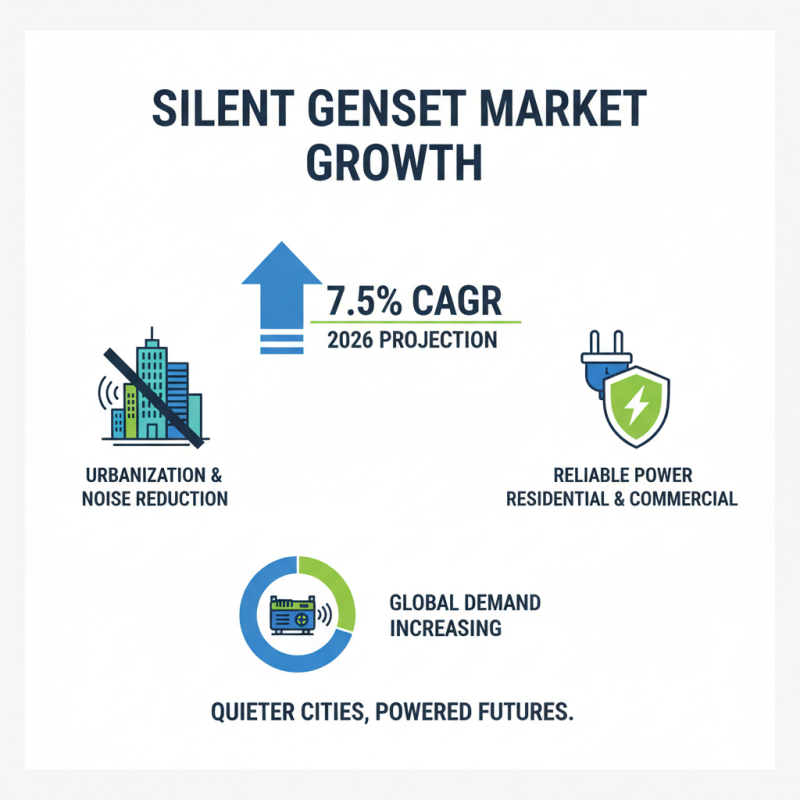
The demand for silent gensets is increasing significantly. By 2026, the global market for silent generators is projected to grow at a compound annual growth rate (CAGR) of 7.5%. This growth is driven by various factors, such as urbanization and the rising need for reliable power sources in residential and commercial sectors. As cities expand, noise pollution becomes a concern. Silent gensets offer a solution, reducing disturbances while still providing essential power.
A recent industry report highlights that the North American market will see heightened demand, fueled by the need for backup power solutions. In many regions, severe weather leads to power outages. Silent gensets are becoming a reliable option for both homes and businesses. As more users turn to these generators, there's a growing necessity for improved technologies to enhance efficiency and reduce emissions. However, challenges remain. Many consumers may not fully understand maintenance needs, which can affect longevity and performance.
Innovations are emerging to tackle these issues. Technological advancements promise quieter operations and lower fuel consumption. These innovations are important, but not all companies may prioritize them. Some may continue to focus solely on cost rather than quality. Consumers must navigate these choices carefully to make informed decisions. The silent genset market in 2026 promises growth, but it begs for increased consumer education and responsibility.

 Sinotruk Parts
 Shacman Parts
 FAW Parts
 Dongfeng Parts
 Foton Parts
 CHENGLONG PARTS
 Golden Dragon Bus Parts
 King Long Parts
 Yutong Parts
 Higer Parts
 Zhongtong Parts
 Ankai Parts





 Mr. Perry Wu International Sales Director