2026 Best Marine Generator Types for Global Buyers
Choosing the right Marine Generator in 2026 requires more than comparing engine power and purchase prices. Global buyers must examine vessel size, operating routes, electrical loads, fuel availability, and onboard space. A unit that performs well in a calm coastal harbor may struggle during long ocean passages. Salt spray, vibration, heat, and limited ventilation can expose weak designs quickly.
This guide explores the leading marine generator types for commercial vessels, workboats, yachts, and offshore applications. It considers diesel, hybrid, variable-speed, and emergency generator systems. Each type offers different benefits for fuel economy, noise control, maintenance access, and power stability. Practical selection also depends on rated output, standby capacity, 50 or 60 Hz requirements, emissions controls, and certified safety features.
Real-world experience matters. Engineers often inspect cable routing, cooling-water flow, exhaust temperatures, and service access before approving a generator. Buyers should also confirm regional certification, warranty coverage, spare-parts availability, and technician support. A low initial price can become expensive when filters, injectors, or control modules are difficult to source.
No single choice is perfect. That assumption can fail. Some newer systems promise impressive efficiency but still need longer operating histories. Older diesel platforms may be less refined, yet their repair knowledge is widely available. By comparing verified specifications with actual vessel conditions, buyers can make a more reliable decision. This 2026 overview provides a clear starting point, while reminding readers to consult qualified marine engineers before final installation.
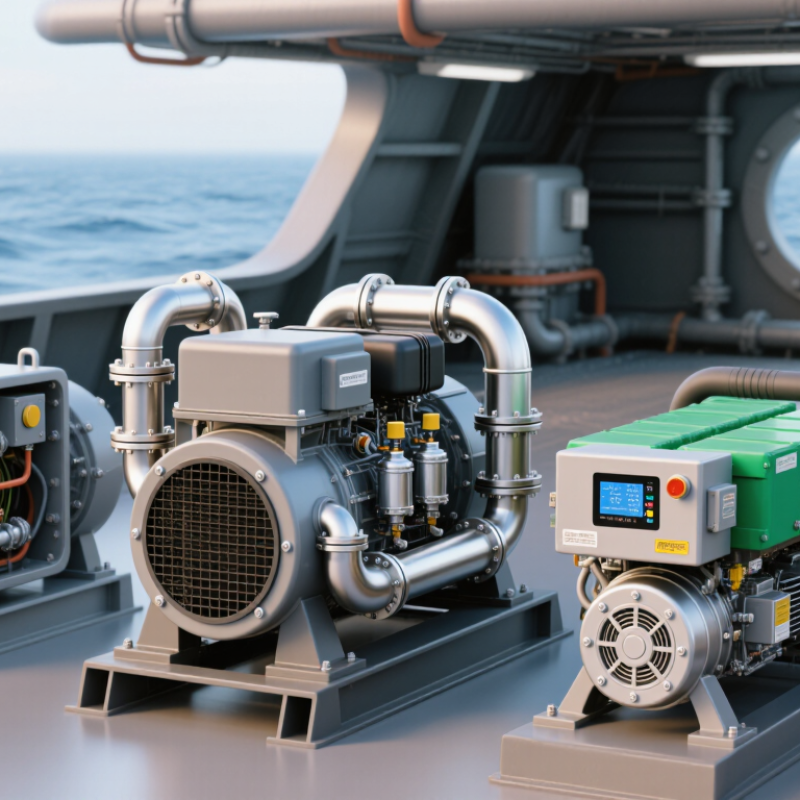
Marine Generator Basics: Purpose, Components, and Operating Principles
A marine generator converts fuel or stored energy into dependable onboard electricity. It powers navigation, pumps, refrigeration, communications, and hotel loads when shore power is unavailable. The IMO Fourth Greenhouse Gas Study 2020 estimated shipping produced about 1,076 million tonnes of CO2e in 2018. That figure makes efficient generation a practical priority, not just an environmental ambition.
Common choices include diesel, gas, dual-fuel, and battery-assisted systems. A diesel generator combines a prime mover, alternator, governor, cooling circuit, fuel system, exhaust, sensors, and switchboard. The engine creates mechanical rotation. The alternator then produces electrical current through electromagnetic induction. An automatic voltage regulator stabilizes output, while protection devices respond to overloads or short circuits. Small details matter.
Fuel quality matters. So does maintenance.
The DNV Maritime Forecast to 2050 highlights efficiency, operational flexibility, and lower-emission energy systems as major maritime trends. For global buyers, generator sizing should match continuous loads, starting currents, vessel routes, and emergency requirements. A set that works well in a coastal workboat may fail under a cruise vessel’s hotel load. Hybrid systems can reduce engine running time, but batteries add weight, cooling needs, and replacement planning. I have seen specifications focus heavily on rated kilowatts while overlooking salt exposure and transient loads. That is a costly gap. Performance should be checked under realistic waves, temperatures, and partial-load conditions.
Major Marine Generator Types and Their Power Generation Methods
Diesel generator sets remain common because combustion drives a crankshaft, which turns an alternator. They start reliably in cold engine rooms. Their weakness is fuel consumption at low loads. The International Maritime Organization’s 2023 GHG Strategy targets a 20–30% emissions reduction by 2030, compared with 2008 levels. That pressure makes load management essential.
Gas and dual-fuel generator sets burn natural gas, diesel, or approved alternative fuels inside an engine. They can reduce local pollutants, but methane slip requires careful monitoring. Shaft generators use mechanical power from the main propulsion shaft. A converter stabilizes frequency for onboard equipment. They work efficiently during ocean passage, but lose value when the main engine runs slowly. Power quality matters. Steam turbine generators use steam from boilers or recovered exhaust heat. They suit vessels with continuous high-temperature processes, not every cargo ship.
Fuel-cell systems create electricity electrochemically, often from hydrogen or processed fuels. They produce low local emissions, though storage volume and fuel availability remain difficult. DNV’s Maritime Forecast to 2050 treats alternative fuels and onboard efficiency as central transition issues. UNCTAD’s Review of Maritime Transport 2024 recorded more than 112,000 commercial vessels at the start of 2024, showing why one generator choice cannot fit every route. In practical vessel assessments, buyers should compare duty cycle, redundancy, maintenance access, noise, and port restrictions. A larger generator may appear safer. It can also waste fuel for years. Sizing is still imperfect.
Fuel Options, Emissions, and Efficiency for Global Marine Applications
2026 Best Marine Generator Types for Global Buyers
Fuel Options, Emissions, and Efficiency for Global Marine Applications
Marine generator selection now depends on fuel access, operating profile, and emissions rules. The International Maritime Organization’s Fourth GHG Study reports that shipping produced about 2.89% of global human-caused greenhouse gas emissions in 2018. That figure makes fuel efficiency more than a purchasing detail.
Conventional diesel generators remain practical for remote ports and heavy-duty vessels. They offer established supply networks and strong load response. However, sulfur content, nitrogen oxides, and particulate emissions still require careful control.
LNG can reduce sulfur oxides and particles, but methane slip weakens its climate benefit. The cleaner choice is not always obvious.
Methanol systems simplify fuel handling, while renewable methanol can lower lifecycle emissions. Ammonia produces no carbon dioxide at the engine exhaust, yet combustion may create nitrogen oxides and nitrous oxide. Safety planning remains essential.
Battery hybrid systems suit ferries, harbor craft, and vessels with frequent load changes. They can reduce idling and improve generator loading.
The International Energy Agency notes that shipping needs deep emissions cuts despite growing global transport demand. The IMO’s 2023 strategy targets net-zero emissions around 2050, with interim reductions of 20–30% by 2030 and 70–80% by 2040, compared with 2008. Buyers should therefore compare lifecycle emissions, not only exhaust figures.
UNCTAD reports that maritime transport carries over 80% of global trade by volume. A small efficiency loss across many operating hours becomes significant.
Fuel availability, crew training, maintenance skills, and real voyage data can matter more than a promising laboratory rating.
How to Compare Marine Generators by Vessel Size and Electrical Demand
2026 Best Marine Generator Types for Global Buyers
Marine generator selection starts with the vessel’s electrical profile, not its hull length alone. Measure continuous loads, peak loads, and future equipment additions. Record motors, pumps, navigation systems, refrigeration, lighting, and battery chargers separately. A pump may need three times its running current during startup. Choose a prime-rated generator for regular operation, not a standby unit used continuously. Allow operating margin, but avoid excessive oversizing. Large engines running lightly can suffer poor fuel efficiency and carbon buildup. Marine-grade cooling, vibration control, corrosion protection, and certified electrical systems also matter in harsh saltwater conditions.
For small workboats, a 10–30 kW generator may support basic navigation, lighting, pumps, and onboard tools. Medium vessels often need 50–200 kW, especially with air conditioning or hydraulic equipment. Large commercial vessels may require multiple generators above 300 kW, creating redundancy and flexible load sharing. These ranges are only starting points. Real demand varies sharply between fishing, passenger, research, and service vessels. I have seen carefully prepared spreadsheets fail because crew habits were ignored. That mistake is expensive.
Tips: Build a load table using measured readings whenever possible. Include motor-starting current and seasonal equipment. Ask a qualified marine electrician to verify voltage, frequency, protection, and installation space. A supervised load-bank test can expose weak performance before delivery. Keep emergency loads separated from comfort loads. Recheck the design after one operating season.
Installation, Safety, Maintenance, and International Compliance Factors
2026 Best Marine Generator Types for Global Buyers
Installation, Safety, Maintenance, and International Compliance Factors
Choosing a marine generator in 2026 requires more than comparing rated output. Diesel, hybrid, and variable-speed systems suit different loads and machinery spaces. Installation conditions often decide reliability. A unit should match the vessel’s electrical load, duty cycle, fuel system, and ventilation capacity. Measure the machinery space before ordering. Leave service access around filters, belts, terminals, and exhaust joints. Checklists fail. Exhaust routing needs heat shielding, firm support, and safe discharge away from accommodation areas. Flexible mounts can reduce vibration, but poor alignment may create new stress.
Safety planning should cover fuel leaks, hot surfaces, battery isolation, emergency shutdowns, and carbon monoxide monitoring. Use marine-grade cables, protected connections, correct grounding, and circuit protection sized by a qualified electrician. Never treat a household component as an equivalent substitute. International buyers should verify flag-state rules, port requirements, classification expectations, emissions limits, and electrical standards before shipment. Documents matter. Keep manuals, test records, wiring diagrams, conformity evidence, and service history with the vessel. Local authorities may interpret similar requirements differently, so written confirmation is wiser than assumption.
Maintenance becomes easier when inspections follow operating hours, not memory. Check oil, coolant, belts, exhaust joints, battery condition, and alarm functions at documented intervals. Run the generator under a meaningful load when permitted, because light running can hide problems. Keep spare filters and seals dry and labeled. A clean installation helps, but it does not guarantee reliability. Salt spray still finds small gaps. Review the plan after every fault or near miss; a checklist that never changes may be the real warning.
Marine Generator Selection Factors for Global Buyers
The chart compares representative planning values for common marine generator technologies. Actual efficiency and service intervals vary with engine load, duty cycle, fuel quality, operating profile, and manufacturer requirements.
- Installation: Confirm available footprint, ventilation, exhaust back pressure, cooling-water capacity, shock and vibration requirements, and generator-room access.
- Safety: Provide fuel-leak detection, fire protection, emergency shutdowns, grounding, adequate ventilation, and safe battery or gas-fuel handling systems.
- Maintenance: Follow the engine maker’s operating-hour schedule for inspections, lubrication, filters, cooling systems, injectors, and major overhauls.
- International compliance: Verify flag-state and class requirements, SOLAS obligations, MARPOL Annex VI air-emission rules, and the 0.50% global sulfur limit or 0.10% ECA limit where applicable.
Planning reference only: efficiency is shown as a typical electrical-conversion range midpoint, while service interval represents an indicative major-service planning value in operating hours.

 Sinotruk Parts
 Shacman Parts
 FAW Parts
 Dongfeng Parts
 Foton Parts
 CHENGLONG PARTS
 Golden Dragon Bus Parts
 King Long Parts
 Yutong Parts
 Higer Parts
 Zhongtong Parts
 Ankai Parts



 Mr. Perry Wu International Sales Director